Ukraine Denies Supporting M23 Rebels against DRC
Despite multiple rounds of discussions, the Congolese government and the M23 are struggling to reach an agreement on their key points of disagreement.
Listen to this story

14 Jul 2026
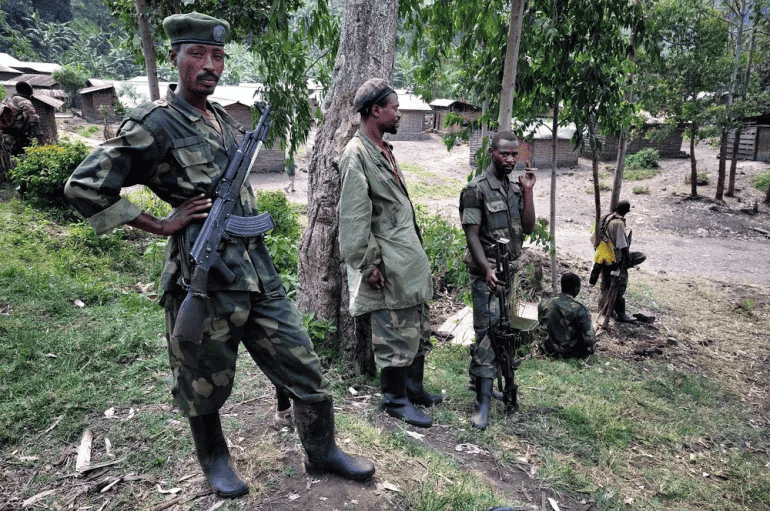
The Ukrainian government has dismissed allegations that it is backing the M23 rebels in the fight againstthe Democratic Republic of Congo. Heorhii Tykhyi, spokesperson for the Ukrainian Ministry of Foreign Affairs, described the accusations as “Kremlin disinformation.”
During his visit to Bujumbura, the capital of Burundi, Russian Foreign Minister Sergei Lavrov claimed that Ukraine is one of the external supporters of the M23 rebellion, which controls significant territories in the North Kivu and South Kivu provinces of the DRC. In a statement on Saturday, July 11, the Ukrainian Foreign Ministry’s spokesperson said the Russian accusations have no concrete element of truth, noting that his country does not support the M23 rebels.
“The affirmations by Lavrov according to which Ukraine supports the M23 in the Eastern DR Congo belong to Kremlin disinformation and are devoid of all foundations. We refute and officially reject these accusations,” Heorhi said.
He stressed that his country does not intervene in African conflicts and that Russia is implementing a policy of interference on the African continent while accusing other nations of similar actions. “Ukraine does not interfere in African conflicts. Russia, on the contrary, does so: it arms groups in violation of sanctions, fuels instability and recruits citizens of African countries to fight in its war against Ukraine. Moscow accuses others of what it does itself: there is nothing new,” he reiterated.
The Ukrainian official said these accusations form part of a broader political strategy by Moscow to distract people from its actions and undermine current diplomatic efforts in the Great Lakes region. “The Russian objective is clear: weaken the American mediation efforts in the Great Lakes region and divert attention from its destructive actions which hinder the peace process,” he said.
The situation remains fluid, even in light of the Washington Accord and several evaluation meetings. The security and humanitarian conditions in eastern DRC have worsened. Tensions persist between the DRC and Rwanda, with each side interpreting the Washington Accord differently. This has complicated matters one year after the accord was signed.
It’s the same issue with the Qatar-facilitated peace accord in Doha. Despite multiple rounds of discussions, the Congolese government and the M23 are struggling to reach an agreement on their key points of disagreement. The Montreux meeting in Switzerland, intended to reinvigorate the process, has not yielded the anticipated results. Commitments made during this phase of negotiations have not been fully honoured, and the worsening security situation in the Middle East has further sidelined this issue, delaying mediation efforts. In light of the current situation, regional and international bodies have urged all parties to honour their commitments from the peace initiatives.
Support Our Journalism
There are millions of ordinary people affected by conflict in Africa whose stories are missing in the mainstream media. HumAngle is determined to tell those challenging and under-reported stories, hoping that the people impacted by these conflicts will find the safety and security they deserve.
To ensure that we continue to provide public service coverage, we have a small favour to ask you. We want you to be part of our journalistic endeavour by contributing a token to us.
Your donation will further promote a robust, free, and independent media.
Comments
0 comments
No comments yet.
Sign in to join the discussion.
Of course, we want our exclusive stories to reach as many people as possible and would appreciate it if you republish them. We only ask that you properly attribute to HumAngle, generally including the author's name, a link to the publication and a line of acknowledgement.