The Long Road to Justice for Survivors of AI-Enabled Drone Wars in Nigeria
A year-long investigation by HumAngle has uncovered the cost of negligence and faulty intelligence in the military’s combat drone operations and the government’s lack of accountability.
Listen to this story

17 Aug 2026
First, white smoke cut through the night. Then the sky tore wide open.
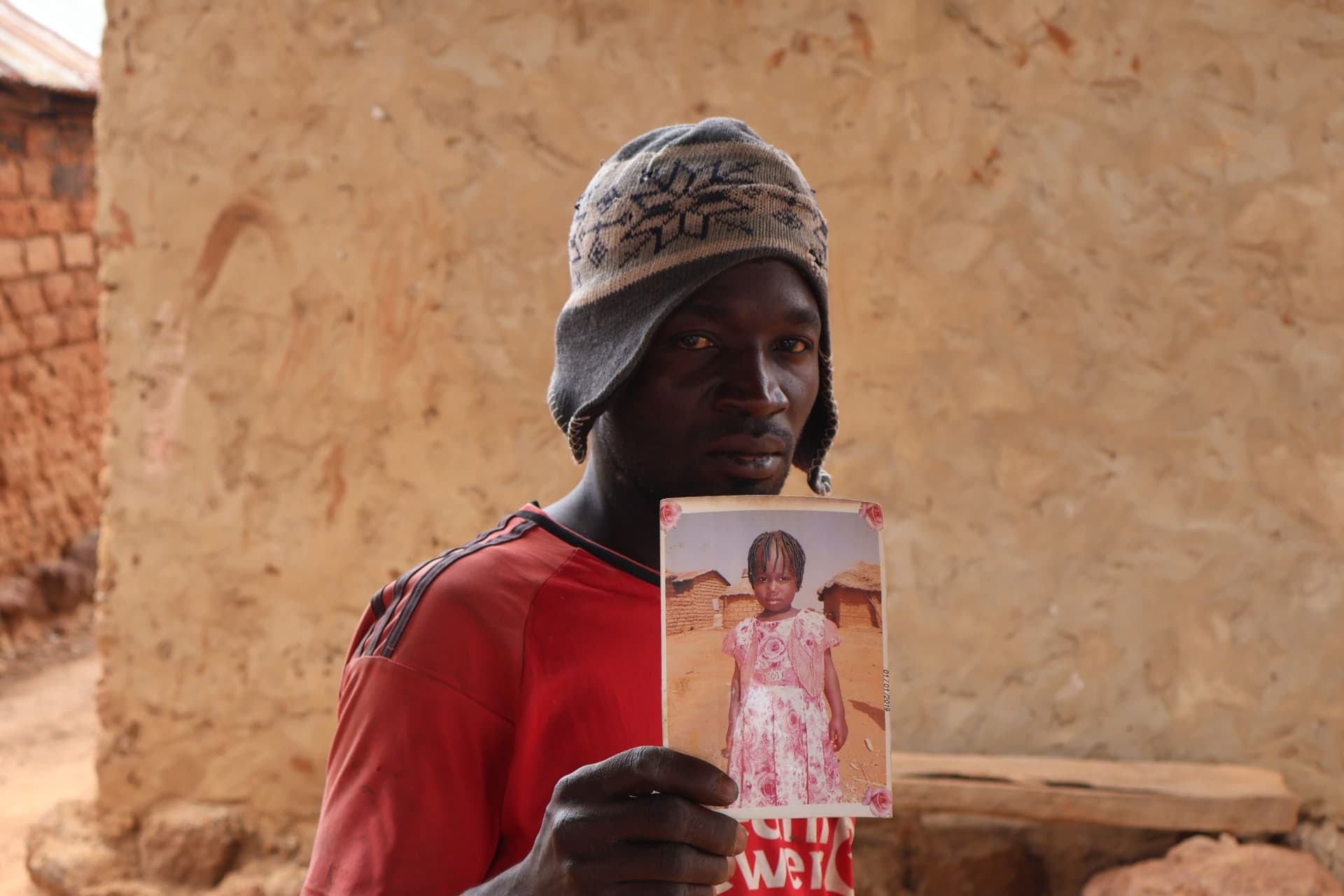
John Solomon says fire rained from above when a military drone hovered over the rustic Tudun Biri village in Kaduna, northwestern Nigeria. As the deputy youth leader in the satellite community, John was in a meeting with his local security volunteers on Dec. 3, 2023, to draw up night-watch rosters for the village’s annual Maulud celebration, an Islamic festival marking the birth of the Prophet Muhammad. Outside the community central mosque, scores of children, women, and men had gathered. They had travelled from surrounding hamlets, drawn out of their dark, unelectrified homes by a rare sight of a disc jockey’s sound system and a bright electric floodlight powered by a petrol generator. At exactly 10:00 p.m., when the children were basking and jumping around the mosque, the first military drone strike hit the centre of the crowd and incinerated everyone within the close-range radius.
“In our village, to see a single electric light bulb is an extraordinary thing for our children,” John quips. “When the generator started, and the mosque area lit up, the children left their family compounds and gathered around the light. We could not stop them.”
Among those swarming around the light ray was his ten-year-old daughter, Keziah Solomon. As the explosion roared, shaking the entire village, John ran out into the courtyard. The ground had opened into a deep crater following the blast, and the air smelt of burnt metal, petrol, and seared flesh. Blinded by dust and smoke, he finally found his daughter amid the rubble and human wreckage. The shrapnel from the military drone weapon had severed her head, hands, and legs. He only recognised her by the specific colour and pattern of the clothes she had put on that evening.
“I found her lying deep down in the centre of the blast hole,” he recounts to HumAngle nearly three years after the deadly incident, as if it just happened. “She was my first child, and now she’s gone.”
As survivors scrambled into the smoke to pull bodies away from the burning crater, a second military drone struck them. Bashar Ahmed, one of those who rushed to the scene to rescue the victims of the first attack, got hit by the second strike, which chopped off his head. At least 85 villagers died after the strikes, and over 70 others were badly injured. Armed with MAM-L micro-munition weapons, the military drone missiles tore through the mud and brick formation in the rural civilian settlement, disrupting the bubbling night merriment.
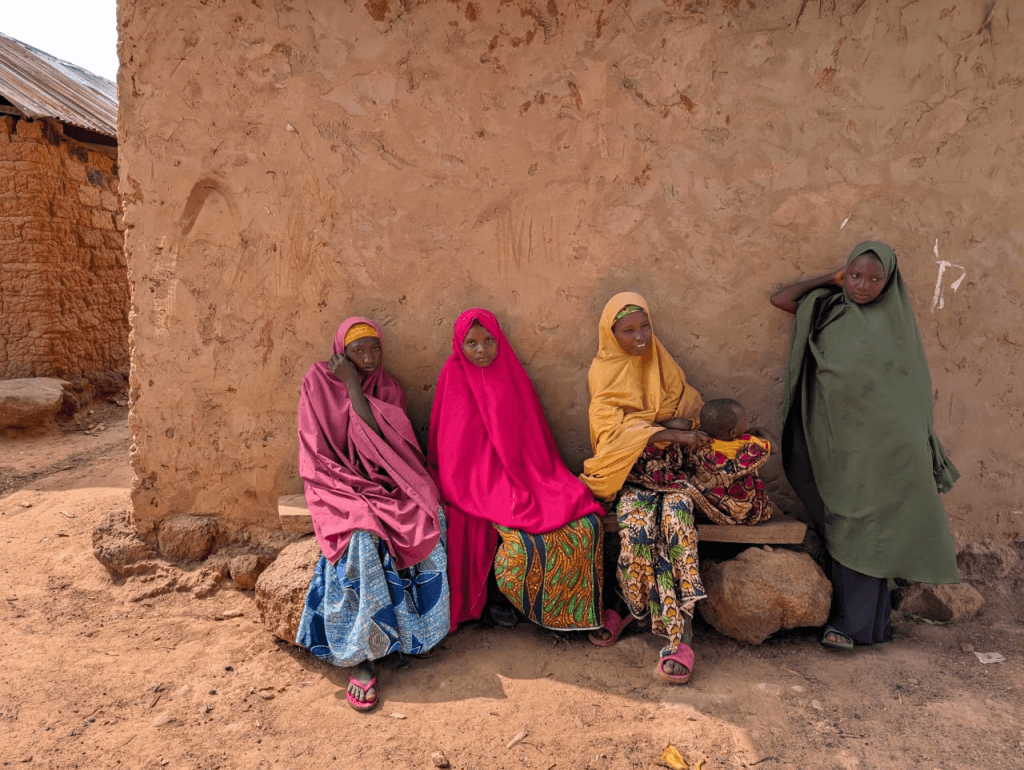
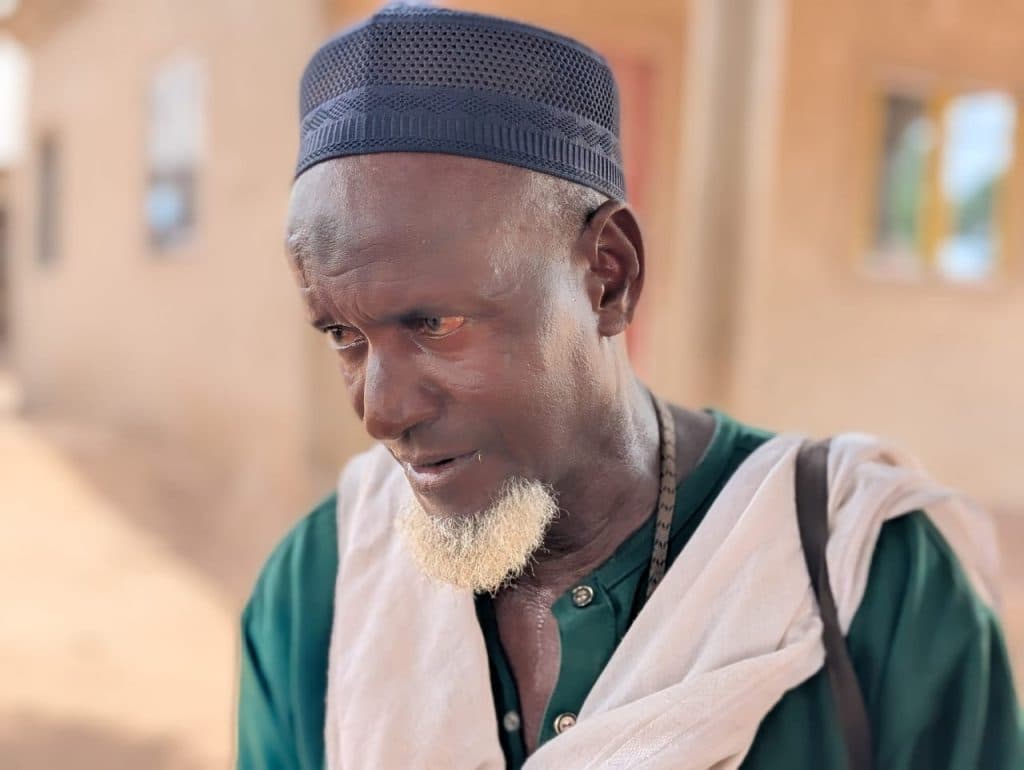
Dozens of people who managed to survive the blast say they carry physical and emotional scars from the attack. One such survivor, Firdausi Hashiru, confronts a daily pain emanating from unhealed scars. In a small dusty compound near the edge of the village, Firdausi sat quietly on a woven mat during HumAngle’s visit to Tudun Biri in April 2026. Most parts of her body have marks of wounds, some of which have refused to heal. When the first bomb detonated, a piece of razor-sharp iron brushed across her jawline, smashing through her teeth and slicing off the front section of her tongue. Beside her was another girl, her gaze fixed on the ground. She extended her right arm to show her injuries. A heavy piece of drone shrapnel cut through her elbow joint during the second blast. The joint healed improperly because the village lacked access to advanced orthopaedic surgeons in the chaotic days following the mass casualty event. Now, her arm is completely locked at a rigid, unbending right angle.
“Everywhere you look in this village, there is a child with a missing foot or arm that does not move,” says Hashimu Abdullahi, a local village elder who lost his wife and three of his children to the strikes. He recalls the night of the strike with terrifying clarity. Before the explosion, he had walked away from the main crowd to invite the deejay to sit with him under a nearby tree to share a plate of rice.
“We were just about to put our hands into the food when the sky turned into fire,” he recalls. “I was knocked backwards by the wind from the blast. I was not right next to the mosque, so I survived with minor injuries. But my family was right in the middle of the circle. We are religious people. Our Maulud consists only of prayers, the beautiful recitation of the Holy Qur’an, and making dua (prayer) to Allah to protect us from the mischief-makers who roam the forests. We were telling God to forgive our ancestors and grant peace to their graves. That is all we were doing when the bombs dropped.”
Immediately after the attack, the Nigerian Air Force (NAF) denied involvement, saying the establishment was “not the only one operating armed drones within the area”. The army took responsibility the next morning during an emergency stakeholder meeting with the Kaduna government, explaining that the community was “inadvertently affected” during a routine anti-terror patrol where their aerial surveillance operators were tracking the movements of terrorists in the rural area. John and other survivors revealed that a government delegation, including Kashim Shettima, the Vice President of Nigeria, Uba Sani, the Kaduna State Governor, and army commanders, visited their village to acknowledge what they called a mistake and to promise comprehensive restitution and financial compensation for their losses.
While authorities built some public infrastructure in the village, including a paved access road, a basic health clinic, a primary school and a skills acquisition centre, the government has defaulted on its financial promises to the victims, a HumAngle investigation has revealed. The grieving families of Tudun Biri described the infrastructure as dysfunctional, saying it is an attempt to avoid liability and buy their silence. What they consider justice for lives lost and survivors carrying scars and grief with them is the payment of Diyyah, an Islamic financial compensation paid to a victim or their family in cases of involuntary killing, physical harm or property damage, as demonstrated during the military drone attack.
“Promises are a heavy burden that must be carried to the end,” says Victor Emmanuel, a local farmer who lost his daughter, Margaret, in the strike. “The Vice President of Nigeria and our governor came to this village and promised to pay every family individual a diyya. These public buildings are not personal compensation to us.”
Hashimu says that, as a Muslim, he had surrendered his deep grief to faith and decided not to speak maliciously against the government. But his religious patience has now reached its limit at the edge of the government’s unfulfilled promises. Resigning to fate does not equate to abandoning the struggle for justice, he says.
“The government came here and made specific promises because they knew they had committed a great wrong. We want those promises fulfilled,” he says.
The algorithm behind a bombing technology
In recent years, Nigeria has transformed its approach to counterterrorism campaigns, attempting to replace its ground troops with an arsenal of uncrewed aerial vehicles (UAVs) controlled by air combat operators sitting at computers miles away. The fundamental transformation reached its full force when the military began to patronise the booming global market of UAVs, amid the deepening unpopularity of ground troops losing heavily to shadowy terrorists. The air force, which fronts air wars against terrorists in Nigeria, embraced tech-driven warfare by acquiring different fleets of UAVs, including the Chinese-made CASC Rainbow CH-3 and CH-4 and Wing Loong UAV combat drones.
However, the UAV deployed for the Kaduna airstrike was different. The Nigerian army, which took responsibility for the attack, is known to operate the Bayraktar TB2, a Turkish-made drone. The journey to acquire the semi-autonomous drones began on August 31, 2021, when a Turkish ambassador visited the army headquartersin Abuja to pitch the hardware directly to the army leadership. Later in September 2022, photos of a fleet of Turkish-made Bayraktar TB2 drones painted in the colours of the Nigerian flag surfaced online. This was followed by reports that the army had acquired six TB2 drones and that its officers were already receiving training in combat drone operations.
Like other autonomous aircraft, the TB2drones are equipped with electro-optical and infrared(EO/IR) camera pods and rely heavily on computer vision software and automated tracking algorithms to scan from 16,000 feet. The drone is designed to search for specific signatures such as light in the middle of pitch darkness, uniform movement patterns, and large clusters of people, according to drone experts who reviewed the AI-powered TB2’s features. Flying over the firmament of a Nigerian Tudun Biri village on the night of Dec. 3, 2023, however, the drone’s algorithmic system captured villagers gathering in the dark for a peaceful religious festival. Sources from the army operations wing told HumAngle that the automated system was unable to read the human details of the night gathering, causing the operators to interpret the data as a high-probability hostile target area.
Although the drone functioned as designed, it failed to detect the civilian features of the rural settlement. Once the screen shows a threat, experts say, the operator clicks a button in the control room, and the bomb falls with absolute mathematical precision. Blame the algorithmic bombing technology, but blame the military operators who deployed it more for gathering faulty ground-level intelligence that led it into Tudun Biri in the first place. The official narrative provided by the army was that its air wing was on “aerial patrol when they observed a group of people and wrongly analysed and misinterpreted their pattern of activities to be similar to that of the bandits”, leading them to carry out the drone strike.
HumAngle spoke to ground soldiers who operated around the Tudun Biri axis before the night drone attack. The army had gotten a signal from its ground troops that terrorists were planning to conduct a large-scale attack in Tudun Biri on the night of the religious procession. While engaging the terrorists in the forest area surrounding the satellite village, the ground soldiers lost sight of their targets and called for air support.
“The air support got the wrong intel from ground soldiers,” one army officer reiterated. His assertion was corroborated by at least four other officers, who asked for anonymity because they were not permitted to speak to the press on this matter. “They got the wrong grid reference of the location of the terrorists, so the drone came and fired based on the intel it got.”
After the army publicly admitted its operational failures in Tudun Biri, the military leadership and the Kaduna state government promised to probe the true cause of the mishap. In May 2024, Edward Buba, the Director of Defence Media Operations, revealed at a press conference that two Nigerian army officers had been indicted for negligence. Edward said the military has conducted a painstaking investigation and the indicted personnel would face a court-martial for “acts of omission or commission with respect to the incident”.
“It must be made clear that the incident was a mistake, as the victims of the strike were mistaken for terrorists,” Edward noted during the press briefing. “It is hoped that there would be no repeat of strikes on non-combatants in ongoing operations. The military will take extra precautions in the future to ensure that non-combatants are safe.”
When asked whether the military had told them about the trials or the outcome of the court-martial, the villagers said they had no information. No official from the defence ministry has returned to the village to update them about those indicted or their punishments. The Nigerian army has not responded to HumAngle’s inquiry about the results of our investigation and updates on the officers who were reportedly court-martialled. The army has also not provided any explanation for the failure of its infrastructure or its inability to fulfil commitments to compensate the victims financially.
Amid the sharp rise in technologised warfare and AI governance, Elke Schwarz, a military technology ethicist and professor at Queen Mary University of London, warns operators deploying UAVs in fragile zones to be wary of signature strikes, which target based on patterns of life metadata and behavioural markers rather than verified identities. Elke says this system reduces human subjects to “anonymous simulacra” and reinforces automation bias, prompting operators to prioritise machine logic over human-centred intelligence.
The rapid reliance on a semi-autonomous drone has outpaced Nigeria’s legal frameworks, exposing the country’s flawed intelligence systems, zero or blurry accountability, and critical policy gaps, according to human security experts and military analysts HumAngle consulted for this investigation, including Adejoh Sunday, a Senior Lecturer with the Nigerian Defence Academy and Hassan-Taiwo Adebayo, a Senior Researcher at the Institute of Security Studies. The experts noted that military operatives seem to be deploying remote drone technologies within a framework designed for manned aerial vehicles (MAVs).
“Deploying technology is the way to go for any serious country,” Adejoh declares, “but we must ensure that those utilising this technology are properly trained. If those [military] workforce are well trained, act professionally and understand the ethics surrounding the use of this technology, there won’t be any cause for alarm.”
Marketed by suppliers as a surgically precise war machine and framed as minimising collateral damage, the deployment of high-tech UAVs in Kaduna and several other conflict theatres reveals the danger of dependence on sensor feeds failing to distinguish civilian activities and tactical terrorist movements. As Nigeria rapidly patronises AI-enabled armed drones in counter-insurgency operations, flaws in target identification by military operators have forced civilians to take bullets for terrorists.
“As it has happened with the deployment of other technologies, overreliance on AI has caused operators to fail to integrate human components. From a civilian protection perspective, this tech is best deployed when it’s hybrid. If the drones gather intelligence, the military should have measures, through human beings, to verify it,” says Hassan-Taiwo. “Human knowledge will tell you that this area is overlapped by civilians trapped in armed groups’ zones. Therefore, you cannot throw a bomb in, for instance, a crowded market or a place where a religious procession is taking place.”
A loving community disrupted by military airstrike
Tudun Biri sits within the Igabi Local Government Area (LGA) in Kaduna, a region characterised by thick forests, poor roads, and vast ungoverned spaces that have become sanctuaries for terrorists. These groups operate out of hidden camps deep within the intersecting forests of Kaduna, Zamfara, and Katsina states, emerging on motorcycles to abduct travellers and villagers, and kill at will. As the overstretched Nigerian federal police and army units struggled to maintain permanent bases in this rural area, the responsibility for physical survival fell directly onto the shoulders of the villagers themselves. The youths in Tudun Biri formed a vigilante group to protect themselves and their loved ones. Abubakar Musa serves as both the district youth leader and the local commander of the Kaduna Vigilante Service, a state-recognised, unpaid volunteer defence corps. Abubakar told HumAngle that Tudun Biri had been forced to transform itself into a small, functional military garrison long before the drone strikes.
“The terrorists attacked our community six or seven times,” Abubakar says. “There was a time when they came in the afternoon and killed four of our bravest men in an open gunfight. They came onto our farms and snatched people away while they were harvesting. They took four of our young boys at once, and we had to scramble to raise ₦700,000 (an equivalent of $500) just to secure their lives back from the forest.”
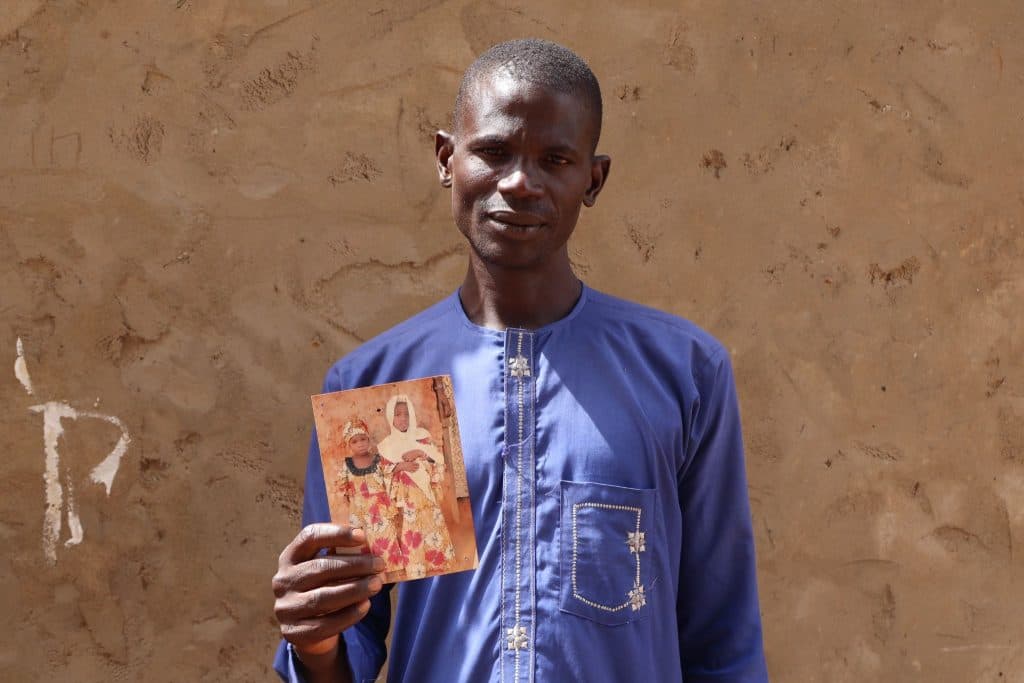
Roughly eight months before the military drone strikes, a terrorist gang infiltrated the village and kidnapped Abubakar’s wife, Salima. He spent weeks negotiating with the kidnappers before he eventually paid a ransom of ₦200,000 – which is about $145 – to secure her release. On the night of the Maulud celebration, Salima was standing near the mosque with their eight-year-old daughter, Rashida. Both were killed instantly by the first missile.
“She was back with me for only eight months,” Abubakar cries. “And then the government drone killed her.”
The confirmation of armed groups’ presence in the area justifies why an army combat drone was hovering above Tudun Biri. But villagers believe that the military’s official claim that its aerial surveillance operators tracked a suspicious gathering of men matching the movement patterns of local terrorists reveals a total lack of basic intelligence about how rural communities survive. Since there were no security posts near the community at the time and the regular security forces rarely responded to their distress calls, the village had formed tight, cooperative security networks. On the night of the strike, the joint volunteer defence team was actively monitoring the perimeter while the rest of the town prepared for the Maulud celebration. The visual evidence from the air, Abubakar insists, should have told the drone operators everything they needed to know. The Maulud celebration took place under bright lights; the generator was loud, and the lights shone brightly around the mosque and over the people.
“Terrorists never stay in a place where there is light like that. They love the darkness,” Abubakar reiterates. “They hide in the dark side of the bush so nobody can see their faces or their guns. We do not mingle with them, and nobody here associates with them. We are the ones fighting the terrorists. We are their mortal enemies. We have killed their men in battle, and they have killed ours. Each side wants to destroy the other. The terrorists know we are brave, so they had even stopped coming near our village for a while because they knew we would repel them. How could the army look down from the sky and think we were the criminals?”
Although authorities have frequently oversimplified the complex situations of civilian casualties during air raids on terrorists in Nigeria, defence analysts say such distinctions do not absolve military operators of legal liability under international law. “Whether there is an intelligence failure or an improper interpretation of intelligence, all of these are negligence; it doesn’t matter,” Adejoh says, noting that military operators are duty-bound to exercise caution before triggering attacks even during anti-terror campaigns. “What matters is that human rights have been violated and the international law principle has also been violated. It’s very simple.”
Unlike many parts of the northern region, where ethnicity and religious differences trigger armed conflicts, in this village, the common threat of armed forest-based men completely erased those lines. The community successfully built a survival strategy around cooperative unity, bringing Muslim and Christian residents together into a singular defensive unit. This integration is visible in the day-to-day administrative leadership of the local youth defence corps. John, a Christian who serves as the deputy youth leader, and Hashimu, a Muslim village elder, jointly manage the volunteer security force for the entire village. When terrorists began demanding illegal farming taxes and threatening to chase the farmers off their maize fields, the village leaders mobilised their young men into a unified, self-funded civilian guard to patrol the farmland. Abubakar, the district’s veteran vigilante commander, stressed that their communal bond is entirely visible to outside observers. The families share agricultural resources, protect each other’s households during raids, and attend each other’s cultural and religious celebrations as a single entity. During Muslim festivals, the Christian members of the volunteer security network will guard the village, and vice versa.
“We are a peaceful community of farmers who love each other, whether Christian or Muslim. You can’t tell us apart because we live as one family,” says Abubakar.
The white elephant projects
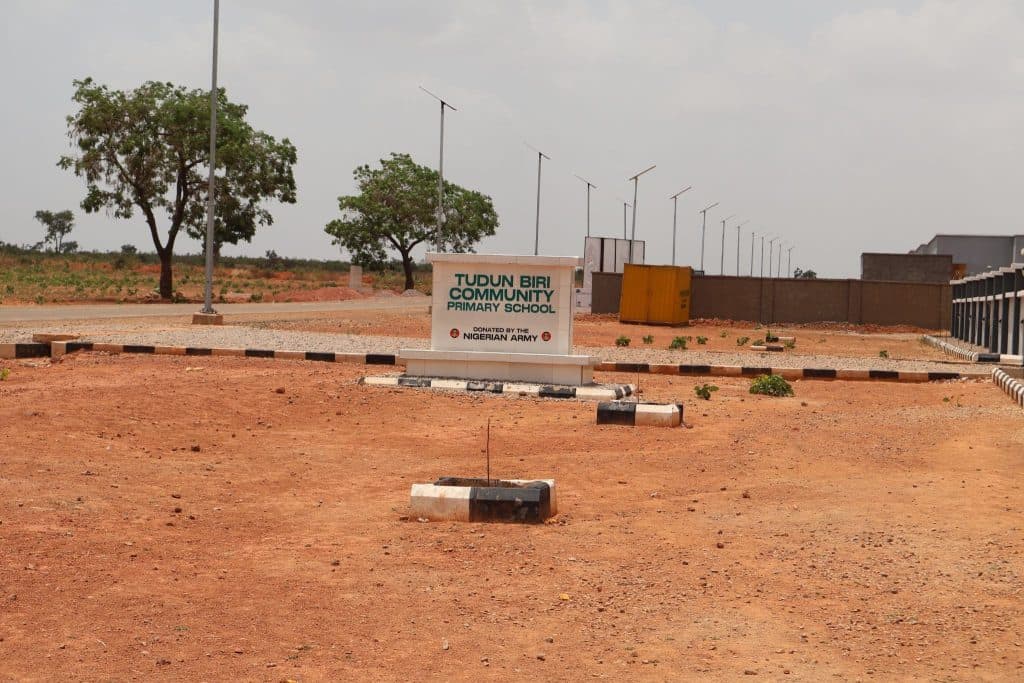
In less than two years after the attack, the government completed the construction of a new primary school, a modern healthcare facility, and a skills acquisition centre. It also paved the road connecting Tudun Biri to the main highway. When HumAngle visited the sites of these facilities in Tudun Biri, the structures looked appealing. But interviews with villagers reveal that those structures are idle and dysfunctional, with some locals calling them a project of “beauty without brains”. The government built the facilities but failed to provide the funds to keep them running. Abubakar, the vigilante commander, walked this reporter through the corridor of the newly built primary school. While the building looks impressive from outside, the institution seems non-functional.
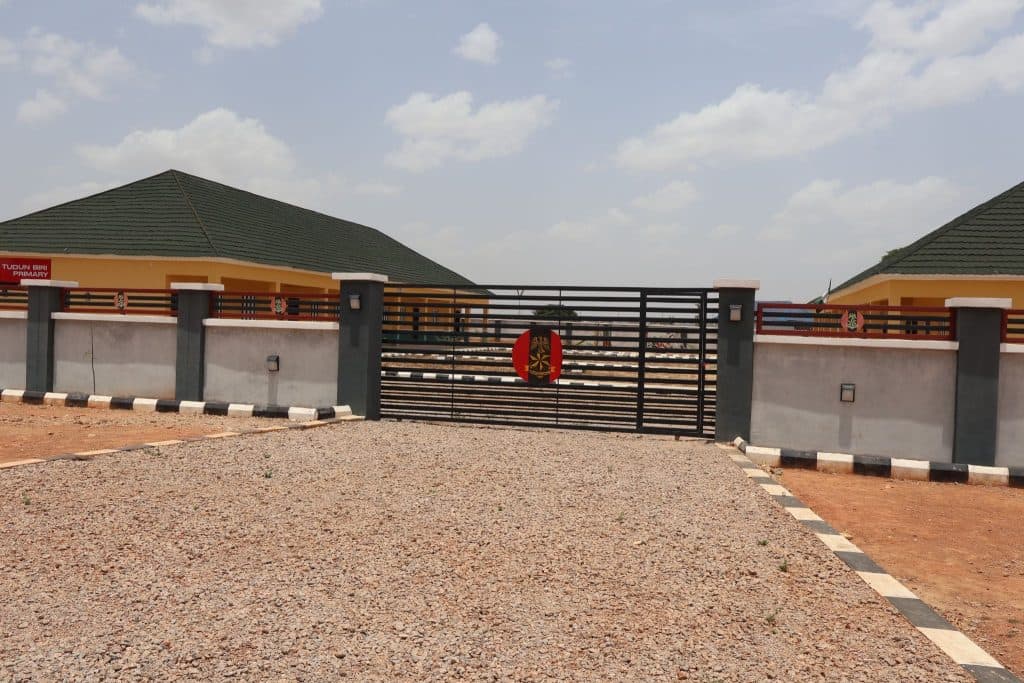
“The government built this school for us, and we have more than 500 students in this community who are desperate to learn,” Abubakar says. “The special adviser on education to the President, Dr Abdullahi Tanko Yakasai, came here and brought crates of school uniforms and stacks of textbooks for our children. We acknowledge his kindness, and we thank him for it. But the government has completely failed to employ or pay a single regular teacher. Every single person who has stood in this building since it was built is a local volunteer from the neighbouring villages. They do not receive a single naira from the government. They are doing it out of pure charity. Now the teachers are bitterly complaining about unpaid wages. They cannot buy food for their own families while working for free. So, the school has closed.”
While the government might have built structures to restore the Tudun Biri locality, the villagers say they are unsatisfied with the dysfunctional state of the facilities. The immediate aftermath of the disaster involves managing the village’s newly orphaned population. The dual strikes killed dozens of mothers and fathers, leaving more than forty children with no direct parental support or domestic structure. Abubakar warns that leaving traumatised, parentless children without basic education or structural support places their future at risk and creates a severe, long-term security threat for the state. He adds that the main danger of this neglect is that these children are growing up with a deep emotional wound. If they are allowed to grow up in total ignorance, without an education, only to eventually discover that their own government killed their parents and left them to starve without any assistance, the resulting tension will harden them. A child hardened by that kind of abandonment will eventually seek revenge against society, Abubakar says, noting that if the government provides individual financial compensation to ensure their survival and employs qualified teachers to educate them, their hearts will be softened.
“Knowledge stops the cycle of violence, and the government must do the needful right now to avoid greater trouble in the future.”
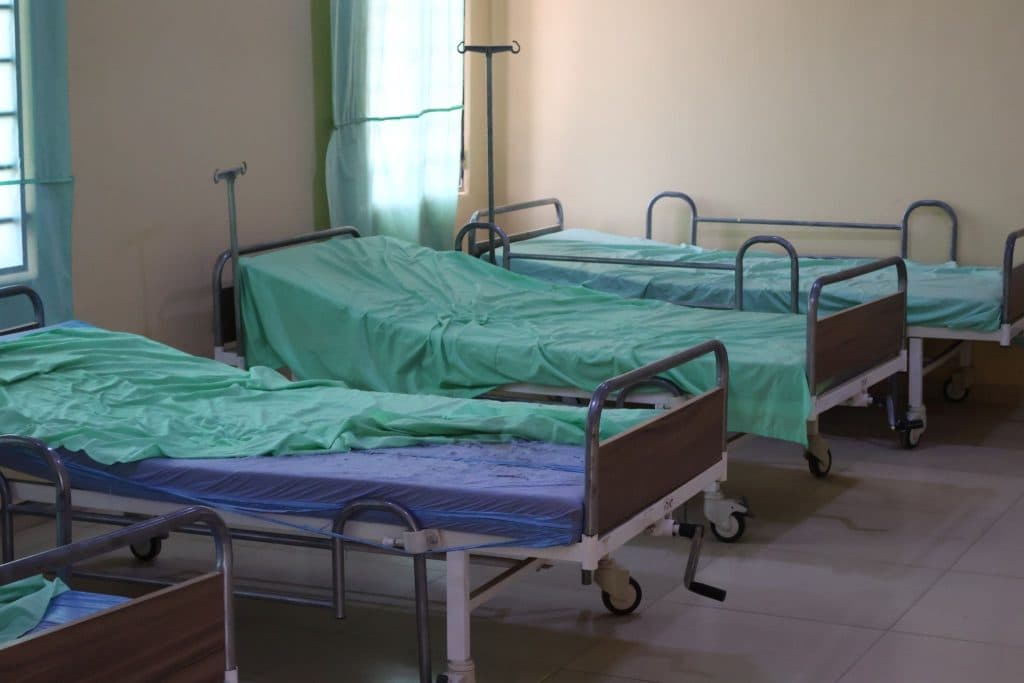
There was no single patient when HumAngle visited the medical facility; the ward’s beds seemed new from afar, but a closer look revealed they were wearing out from neglect. Ismail Abdulrahuf, the medical officer we met during our visit, says the clinic is supposed to have six staff, but we saw only him and one other person loitering around. He hasn’t been paid since he started working there in 2024, and has been clamouring for financial support from the authorities to run the hospital. He survives on an ad hoc role he got through the Maternal Mortality Reduction Initiative, a programme run by the Kaduna State Government, where he earns only ₦300,000 (a little above $218) every three months.
“We’re even trying to create awareness for villagers to patronise this clinic,” Ismail says, throwing a long smile before wearing a sour face. “Most people prefer to go to town to receive treatments that we can handle here if we had enough resources.”
Unable to benefit from the structures the government built for them, the survivors say they’re more compelled to receive the compensation that will benefit their individual families. With this, they would be able to educate their orphans, care for their elderly, and appease the dead. After the government promised to compensate the Tudun Biri survivors following the drone attack, Shehu Dahiru Usman Bauchi, the supreme leader of the Tijjaniya Sufi in northern Nigeria, took up the villagers’ cause for accountability. The entire population of Tudun Biri belongs to the Tijjaniya, an Islamic group with over a million followers in the country. But during the long intervention journey, the ageing Islamic scholar passed away in November 2025. Though the mantle of leadership and legal negotiation over compensation for Tudun Biri villagers fell to his senior son, Ibrahim Shehu Dahiru Bauchi, the villagers say the direct line with the government ended with their old spiritual leader’s death.
“When you are trying to pursue a legal case with powerful government people, they will always listen to you first with a hypocritical smile,” Abubakar says, retorting. “They tell you exactly what you want to hear so that you will go home quietly and stop making trouble in the media. Our supreme religious leader was the bridge between our village and the state house. Now that he is gone, his children are trying their best, but we no longer know what is going on with our files.”
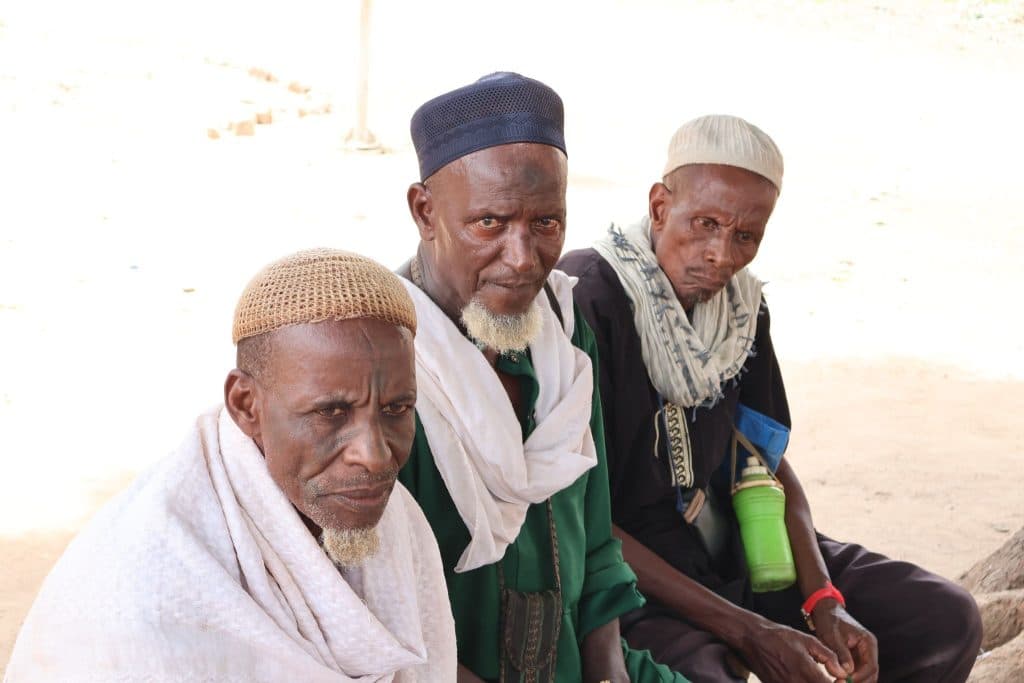
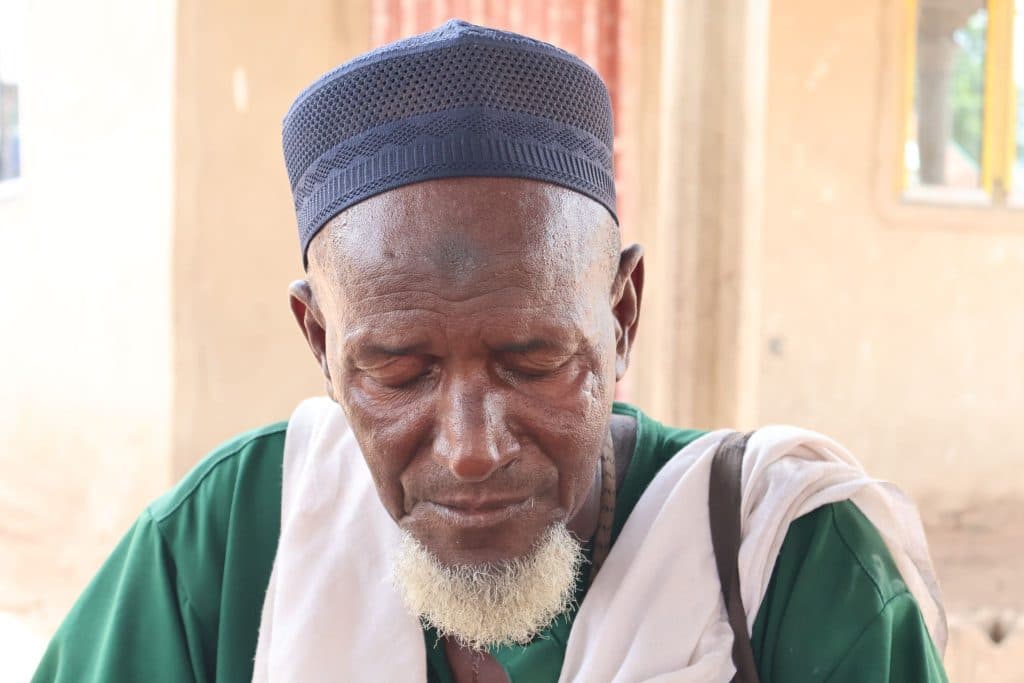
Without the financial compensation, the village elders are left to manage the day-to-day survival of the orphans completely on their own, using the meagre income generated from their farms. Abdullahi Abubakar, the Chief Imam who leads the weekly Juma’at prayers in Tudun Biri, explained that the community faced an immense economic strain during the last holy month of Ramadan and the subsequent Sallah celebrations. With no fathers to buy them new clothes for the festival and no mothers to prepare fasting meals, the villagers had to step in. Neighbours walked from house to house, contributing small amounts of grain and pennies from their own pockets just to ensure the orphans had something to eat when it was time to break their fast. The Imam noted that, while they tried their best, they were just poor farmers who could not bear this heavy financial burden forever.
“We need the government to specifically look at the human beings living here in Tudun Biri. They must release specific financial stipends directly to these orphans to help them survive. That is the only way we will know that the government has a sincere intention of fulfilling its promise of paying the Diyya,” the Islamic cleric says.
‘The military acted blindly’
Promises and official regrets have a way of evaporating long before they’re actualised in many villages where military misfires have happened in Nigeria. While the drone disaster in Kaduna has been generously described as an “unprecedented anomaly”, a HumAngle investigation into a similar incident roughly 200 miles south reveals a systemic accountability gap in handling cases of military bombing of civilian settlements. In Nasarawa, North Central Nigeria, a disadvantaged farming community experienced the same military operational failure. This time, an air force drone vaporised a group of young herders clearing confiscated livestock on the Nasarawa border.
Alfa Alhaji and his boys had travelled to the borderland between Nasarawa and Benue States to guide their livestock back home. Moments later, on Jan. 24 2023, he saw the bodies of his children blown away. A few days earlier, his cows had wandered across the Nasarawa border into Benue, where they were seized and locked away by Benue authorities for breaching the state’s anti-open-grazing policy. To secure their release, Alfa and his local community in Nasarawa struggled to raise a massive sum to pay off the imposed fines. But the authorities in Makurdi, Benue State capital, said the cattle had to be loaded onto commercial vehicles before crossing back into Nasarawa territory. The herders hired three trailers. They were drawing to a halt when the military drone strike hit the vehicle.
“The cows had spent five days locked inside without eating any grass or drinking a single drop of water,” says Alfa. “When cows are starved like that, they become unrestrained. If the boys fail to hold them with total strength, they will break away into the woods or drink bad water and die. That is why we needed many boys at the scene to handle the offloading. My biological children went there to help their fellow herders bring the cows home.”
He lost nine of his children to the strike; his cows and those of many herders were reduced to ashes inside the trailers. The air assault on the Rukubi herders, which killed 47 people on the spot and left more than 20 others with critical blast injuries, represents another devastating failure in the Nigerian military’s air campaign. For one whole year, the air force insisted it struck the pastoralists based “on credible intelligence”, citing surveillance footage showing the movement of “suspected terrorists” converging around a vehicle. The force only reversed this position and admitted its failure, following public pressure and calls for justice and transparency from international organisations such as US-based non-profit Human Rights Watch.
On January 26, 2024, Hassan Abubakar, the Chief of Air Staff at the time, visited Rukubi to apologise officially. It was also at this gathering that the air force promised restitution for the victims. However, an investigation by HumAngle shows that despite the condolence visit, the air force has failed to compensate survivors of the armed drone bombing. The government constructed a clinic in Rukubi, a structure the local community views as the barest minimum to avoid legal redress and sweep the case under the carpet. The air force also promised to construct a modern school for the community, but they have failed to do so.
“The government gave nothing to me personally,” Alfa told HumAngle. “They built a hospital for the town, but my children are dead. The boys who were killed left behind multiple young wives and infants. Some had two wives, some had three. I am now an old man, left entirely alone to feed all of these widows and orphans by myself without any support.”
He is more agitated about the tragedy because a state government facilitated the logistics that brought dozens of young men into the strike zone. For years, the introduction of a strict anti-open grazing policy by the neighbouring state government had made the border restrictive for pastoral communities. Livestock that crossed the line from Nasarawa into Benue were routinely captured by state enforcement teams and held under lock and key; the herders were fined the whopping sum of ₦27 million (about $58,000).
Hassan Angulu, a traditional leader in the Rukubi district, noted that when the Benue authorities seized their livestock, the community formed a committee to negotiate the release of the cattle. He said that they pleaded and paid the fine to get their animals back. The Benue authorities then refused to let the cows walk back. They forced the community to hire trucks to move the livestock. The community complied and brought three long trailers to move the entire herd at once, preventing the cows from getting lost in the forest. It was when the trucks were parked to offload that the bombs struck.
When Hassan learned that the air force had deployed a drone to destroy what they thought was a terrorist logistics hub, he flared up in dismay. The community leader faulted air raiders for relying on “falsified intelligence” to attack without independent verification.
“They never gave us an official explanation. The local government chairman and our paramount rulers came here, begged us to remain completely calm and patient, and promised that the government would make things right. But it was all words,” he adds.
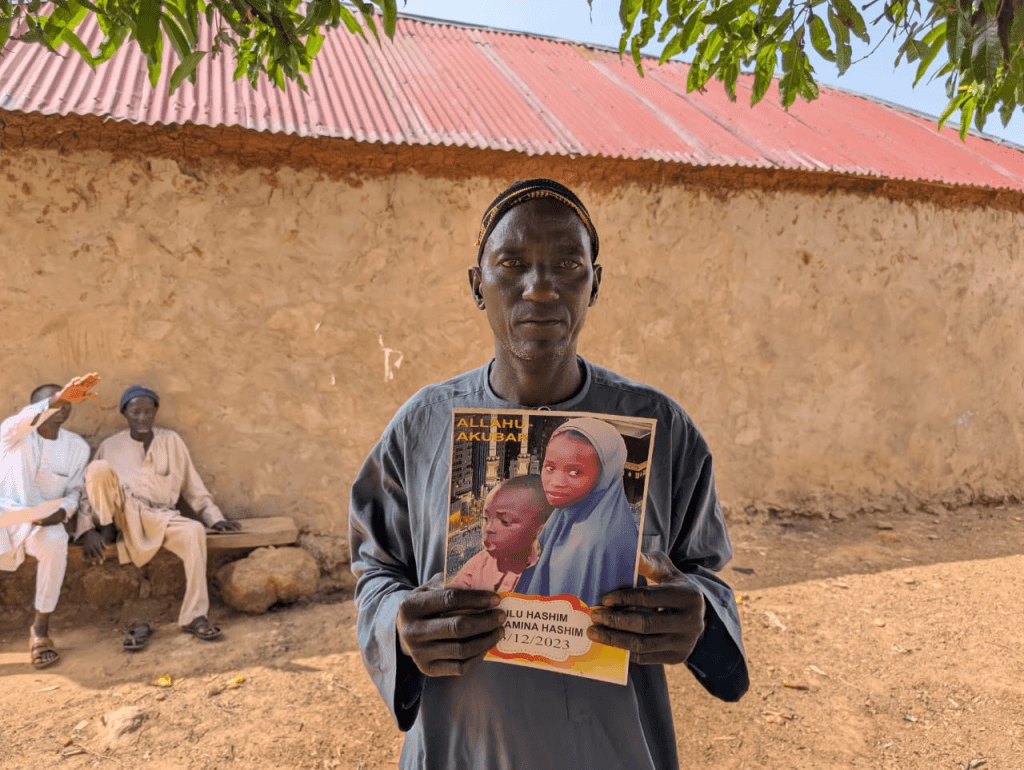
The villagers reiterated that dozens of cows worth millions were killed during the strike, but the government has failed to pay back the pastoralists. Although 42 herders were documented to have been killed, locals said an accurate accounting of the strike may never be fully known because the drone missile targeted the exact spot where the community record-keeper was standing. Shuaibu Hassan, the Chief Imam of Rukubi, revealed that local herders maintained an informal registry system to document incidents like this. The man tasked with maintaining these files went to where the trailers were offloading cattle, carrying his ledger to record the transactions. He died right there in the centre of the blast.
Shuaibu noted that the state government relied on existing rumours regarding armed terrorists to justify the initial deployment of the drone but later backed away from the accusations once the identity of the victims became undeniable. “Yes, there was a heavy rumour in this area that terrorists from Benue were navigating the bushes near Rukubi,” Hassan said. “The military acted blindly upon that rumour without checking the ground. But later, the security forces themselves discovered that it was completely false.”
The Rukubi village, where the fatal drone attack occurred, sits on the shore of Doma LGA in Nasarawa State. Like Tudun Biri, the disadvantaged community lacks nearly all social amenities, with little to no government presence. HumAngle visited the place twice in April 2026 for on-the-ground reporting, hopping on a motorcycle to navigate the unmotorable road network, and plunging into a seven-hour journey to and fro across the back-wrenching landscape. In a gruelling open-air ride, the reporter traversed through dangerous crimson dust amid the suffocating dry earth. Villagers HumAngle spoke to believe the air force bombarded them and denied it at first instance because the community is off-grid or hard to reach.
A pattern of impunity
The military misfires in Tudun Biri and Rukubi are among a long list of operational failures during counterterrorism campaigns in Nigeria. Over the last decade, hundreds of civilian lives have been wasted in different strikes meant for terrorists. In January 2017, a fighter jet struck a camp for internally displaced persons (IDPs) in Rann, Borno State, where more than 50 people were killed. The military said it thought it was a Boko Haram camp. Among the dead were six Red Cross Aid workers. In April 2021, an aerial assault rained down on a civilian crowd at a wedding ceremony in the Genu town of Niger State. This attack, the army reported, was targeted at terrorists; unfortunately, one of the bombs fired at the targets missed and struck ordinary villagers going about their lives.
Long before drones came into play, one of the largest civilian casualties recorded during air wars in Nigeria was on Dec. 19 2022, in the Maru LGA of Zamfara, where an airstrike hit civilians in the Mutumji community. At least 64 persons were killed and dozens of others severely injured. The military high command claimed that the strike targeted a massive formation of terrorists who were actively fleeing from a joint ground operation.
Accidental airstrikes – a military cliché for operational failure – have over the years become a subject of criticism in Nigeria, with authorities failing woefully to put an end to it. Just three months before the air force drone strike on 47 civilian pastoralists and scores of cows, Oladayo Amao, a former chief of air staff in Nigeria, claimed he had set up a committee to compile all allegationsof “accidental airstrikes on civilians as well as review the circumstances leading to such strikes”. During an operations seminar in Uyo, South East Nigeria, the former air force chief said there were deliberate efforts by the institution to “mitigate future instances of collateral damage to civilians”.
Nigerian defence authorities have repeatedly promised to overhaul collateral damage and target identification during counterterrorism operations, but the country continues to record devastating civilian casualties during aerial raids. The latest in the military misfire was recorded last April when the air force struck a civilian market between Borno and Adamawa States. The military insisted it had bombed a major logistical hub for terrorists. According to Amnesty International, more than 100 traders with no ties to terrorism were killed, and many were injured. Since 2017, more than 300 civilian casualties have been linked to military attacks due to faulty intelligence and operational failures, in what have been described as “collateral damage” by military officials avoiding public scrutiny.
Under International Humanitarian Law (IHL), armed forces or military operators are bound to observe the principle of distinction, ensuring that civilians are not misidentified as terrorists or targets during operations. “If the military is unable to distinguish, and a drone is utilised for bombardment of civilians who are non-combatants – this is a very clear violation of International Humanitarian Law, and the military must be held accountable,” says defence analyst Adejoh.
‘We want blood-money’
From Rukubi in Nasarawa to Tudun Biri of Kaduna State, survivors of drone attacks in Nigeria have only one demand as compensation: blood money. In the majority Muslim communities, paving the roads is good, but not enough to raise the children orphaned during the drone attacks, villagers told HumAngle. The hospital in Tudun Biri is failing; the schools are filled with unmotivated volunteer teachers, and the skills acquisition centre is dysfunctional. Survivors say they want to be compensated in the Islamic way, through the payment of Diyyah or blood money.
Shuaibu says neither the state government nor the air force has made any move to compensate survivors of the attack. They’ve had several meetings with the authorities, but only received apologies. “We demand compensation for those who died during the attack,” the cleric adds. “According to the Islamic religion, they are expected to pay us almost ₦200 million for the deceased so that the orphans and the families of the dead will be supported. But since Nigeria is not using Sharia law, I believe our constitution says something about this kind of issue.”
In a state like Nigeria, systems are in place through which survivors can make claims and seek justice, says human security expert Hassan-Taiwo, noting that the country is not bound by law or any convention to pay blood money to victims of military operational failures. Rather than wait endlessly to be paid Diyyah, the analyst adds, the survivors could follow a secular pathway to obtain what they want under the law. “They can file a civil suit; they can approach the national human rights commission; they can apply for administrative claims, requesting a condolence payment from the military, which doesn’t even require a court,” he says. “They have mechanisms in place for all those things. However, there’s a difference between systems in place and actually converting them into a delivery system.”
Adejoh punctures survivors’ quests for blood money as the only way to be compensated or get justice. He says a hail of poverty, underdevelopment, and a lack of understanding of global practices in such situations drives their demand. He advised that they focus more on holding the military accountable to avoid a repeat of such reckless bombing.
“If those attacks did not happen there in the first place, isn’t it the responsibility of the government to provide those basic things that they are asking for?” he pondered. “This can only happen in very backward countries, where there’s poverty of the mind and poor orientation. They should be talking about holding the military officer and the commanding officer accountable so that others will learn from this kind of mistake.”
This investigation was produced in partnership with the Pulitzer Center’s AI Accountability Network.
Support Our Journalism
There are millions of ordinary people affected by conflict in Africa whose stories are missing in the mainstream media. HumAngle is determined to tell those challenging and under-reported stories, hoping that the people impacted by these conflicts will find the safety and security they deserve.
To ensure that we continue to provide public service coverage, we have a small favour to ask you. We want you to be part of our journalistic endeavour by contributing a token to us.
Your donation will further promote a robust, free, and independent media.
Comments
1 comment
Ibrahim Adeyemi
17 Aug 2026, 8:58
What you have just read in this enterprise piece is just one of many inanities and impunities that come with integrating AI-powered drone innovations into warfare in Africa. While military officials reluctantly admitted error in Nigeria, accountability is a mirage elsewhere in the Sub-Saharan Africa. What I saw while covering this story painfully itched my eyes and pinched them until they became reddened from the saddening tales told by silenced survivors in war theatres. You can’t stop at this first one if you want to get the full gist.
Sign in to join the discussion.
Of course, we want our exclusive stories to reach as many people as possible and would appreciate it if you republish them. We only ask that you properly attribute to HumAngle, generally including the author's name, a link to the publication and a line of acknowledgement.