The Cost of Accessibility: How Sick and Disabled Africans Navigate a Failing System (I)
Sick people and those with disabilities in Nigeria navigate an extra layer of obstacles due to the lack of inclusion, accommodations, and an accessible environment as a result of poor awareness, inadequate healthcare systems, legal support and inclusive structures.
Listen to this story

10 Aug 2026
To exist in a world not designed for you is to constantly try to find footing on slippery floors, and for sick people and those with disability, there are no handrails to keep them steady. Disability breathed alongside Stephanie Egharevba the day she was born; it showed up at every graduation, birthday, and in every relationship. Her disability reached people before her voice did, and from a very early age, she learned that people saw it before they saw her.
Stephanie was born with a physical disability caused by Osteogenesis Imperfecta (also known as Brittle Bone Disorder). It is a genetic disorder that causes bones to break easily and can lead to fatal complications such as tears in major arteries. Symptoms range from mild to severe, and may include hearing loss, short stature, dental problems, breathing problems, and a blue tint in the whites of the eyes.
“For most of my life, disability has simply been one part of my reality,” she said. Growing up as a child, she was often one of the few visibly disabled people in many spaces, especially because she attended mainstream primary and secondary schools and later studied at Yaba College of Technology in Lagos, southwestern Nigeria. There was a time, for instance, when she had to attend lectures on the top floor of a four-storey building without a lift. “I became very aware of the barriers that existed around me,” she recounted.
That realisation, together with her lived experiences, eventually led her into disability advocacy. Today, she has dedicated her life to speaking up globally for a more equitable, accessible, and inclusive society.
“Sometimes people assume disability means inability, and that can affect how they interact with you. There are also situations where social events, buildings, transportation or activities are simply not designed with accessibility in mind, which can make participation more difficult,” she explained.
Disability is any impairment or condition, whether mental or physical, that hinders a person’s ability to participate in the world around them. It can affect how a person sees, moves, remembers, hears, communicates, and thinks, as well as their mental health and their ability to navigate social or professional relationships.
About 35 million Nigerians live with disabilities, according to the Joint National Association of People with Disabilities. For them, accessibility and inclusion mean having the same access to resources and opportunities as every other member of society.
However, that has not been the reality. Stephanie said that the social and mental implications of navigating a world that is not designed with people like her in mind are immense. She added that she has also had to shoulder the financial burden of paying for accessibility.
“Financially, disability can be expensive,” she said. “There are costs associated with transportation, accessibility needs, and navigating environments that are not built inclusively. Many people with disabilities spend additional money simply to access the same opportunities others take for granted.”
Professionally, she has experienced both barriers and opportunities. For the disability inclusion advocate, public speaker and social impact professional, accessibility comes down to mobility, transportation, and inclusive design. She requires environments that are physically accessible and easy to navigate, and she can also benefit from digital systems that are intentionally designed to be accessible and inclusive.
The failure of the system
Eight years after the Discrimination Against Persons with Disabilities (Prohibition) Act, 2018 (DAPWDA), which mandated that public facilities include inclusive design features such as ramps and signage, most buildings in the country still lack these features.
A 2025 report by Westminster Foundation for Democracy shows that only 22.4 per cent of surveyed buildings have accessible ramps, only 10.2 per cent feature tactile signage, and about 55.1 per cent of social media platforms and political party websites are not accessible to people with disabilities.
“The barriers I encounter are systemic,” she said. “Many buildings are still inaccessible. Public transportation can be difficult to use. Digital platforms are designed without considering different users. Opportunities are created without considering how persons with disabilities will access them. The challenge is usually the environment around me.”
Even when she attended some events aimed at disability inclusion, there were no accessibility provisions around. She realised that it wasn’t just schools now; it was transportation, public spaces, events, and even digital platforms. Opportunities would exist, but a barrier would prevent her from fully participating.
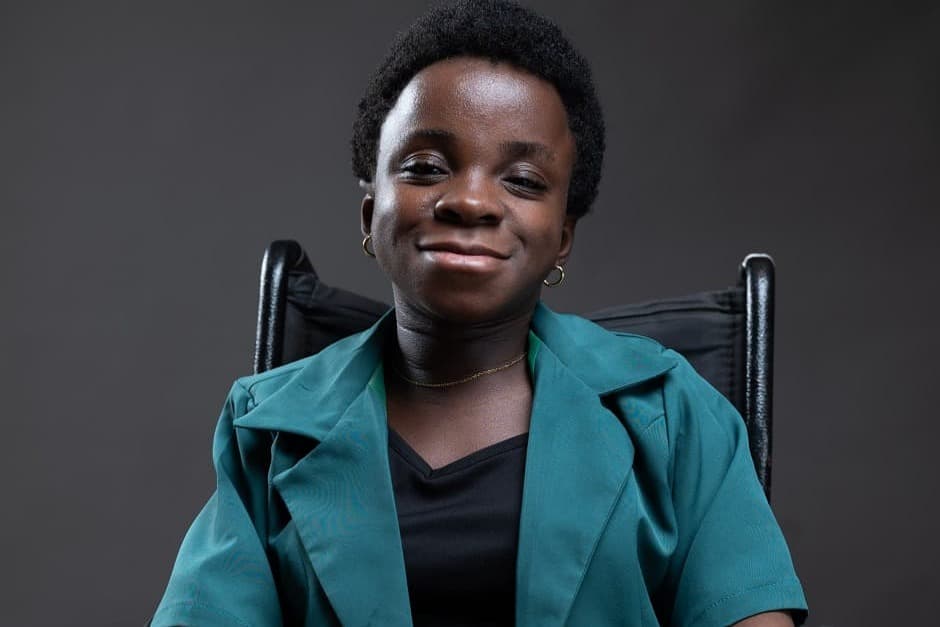
“A defining moment came when I started travelling more for speaking engagements and advocacy work. I realized that attending the same event as everyone needed more planning on my part, so before accepting an invitation, I would need to think about the transportation, I would need to think about the venue accessibility, movement within the space, whether I would be able to navigate the environment independently and who should go with me as an accessibility assistant. I have to consider the schedule of others,” she explained. Stephanie said her focus is on ensuring that systems are designed for people with disabilities, not on them trying to adapt to environments.
People with disabilities often do a lot of invisible labour to manage their conditions. Invisible labour is the unseen, unpaid, and often dismissed effort required to maintain the functionality of relationships and systems, which leads to depression, anxiety, identity struggles, burnout, relational stress, chronic stress, and resentment.
“Disability impacts every part of life in ways people do not know or see. Socially, there have been moments where people underestimated me before getting to know me. Sometimes people only see the successful outcomes. They do not see the extra planning, problem-solving, and energy required to navigate inaccessible systems,” she added.
An inaccessible toilet, for instance, means her independence and privacy are limited. “I am not always comfortable with that, even if it’s my sister. That really affects me, and I can’t use the toilet as often as I need to because I have to consider the person who will assist me,” she added.
Financial challenges compound these barriers for many Nigerians. A 2022 HumAngle report found that often, people with disabilities in conflict areas struggle harder to escape terrorist attacks due to their abilities, making them vulnerable to violence. In 2021, the Federal Government signed a National Policy on Internal Displacements, committing to medical care, psychosocial support, mobility devices, accessible structures, sign language interpreters, and special school enrolment for disabled and wounded internally displaced persons (IDPs).
Yet a 2025 HumAngle report in Borno, northeastern Nigeria, found that IDPs with disabilities struggle with inaccessible bathrooms and stigma from the people around them, which affects their health and puts their lives at risk, creating a more hostile environment for them. In most camps in Borno, ramps are nonexistent, and where they do exist, they are often narrow, broken, or too steep for comfort. People with disability are forced to share these inaccessible hygiene facilities with others, with some being forced to crawl in order to access the bathrooms, increasing the rates of open defecation, which affects public health and can be a security risk, especially for women.
Kaka Adam, an IDP and a wheelchair user, said, “My wives, who also have mobility challenges, suffer even more because they are always at home and don’t have access to open fields to relieve themselves during the day. We often wait till midnight to relieve ourselves in open fields, which are filled with faeces all the time.”
The ones left further behind
For some disabled people, survival takes precedence over thinking about accessibility. This, however, does not mean that the lack of accessibility does not impact their lives. But in the struggle to access healthcare due to lack of finances and to strike a balance between making a living and trying to exist in a world not created for them, a lot gets lost between the lines.
Before the accident that changed his life in the blink of an eye in 2020, Ibrahim Muhammad was a cab driver who earned a living by transporting passengers from Zaria, Kaduna State, northwestern Nigeria, to Ogun State, southwestern Nigeria. It was on one of those trips that he got into an accident.
“My right leg cannot even bend at all after the accident. There were four of us in the car, and unfortunately one passed away soon after the incident,” he recounted.
He initially sought treatment, but it proved unsustainable given his income and the physical toll involved. Reaching care at Ahmadu Bello University Teaching Hospital, Shika, often meant walking long distances, a serious strain on his leg.
“I use a walking stick sometimes, but not all the time. Even when I used to go to the hospital, the bike had to drop me as close as it could get because I couldn’t really walk most of the distance,” the 44-year-old said.
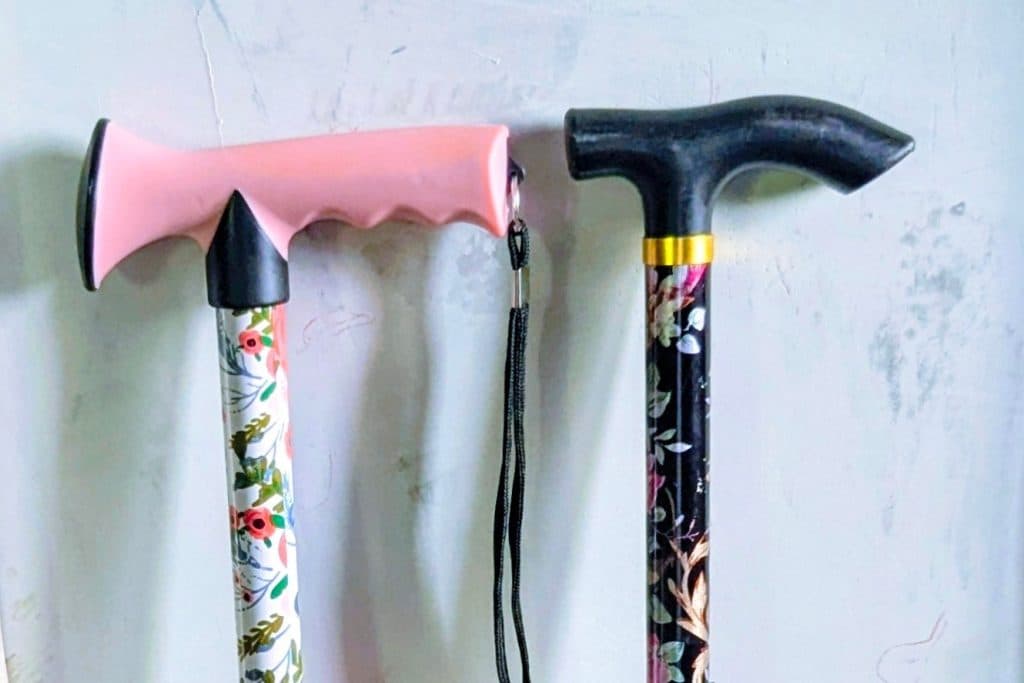
Driving became impossible after the accident, and months stuck at home forced him to find another way to survive. So he started a black market petrol-vending business on his street. Even that has its challenges, as he must get up and walk to customers’ cars when they arrive. He said he goes out only when necessary because his body cannot withstand strenuous activity.
“I can only stand for very short periods of time. It takes me a long time to get anywhere, and if there are no seats available, I would rather not go. I am usually always at work or at home,” he said. The only transport he can tolerate is a motorcycle; anything else puts too much strain on his leg.
“Even when I need to restock on the petrol I sell, I do not go myself; I usually leave that task to my junior brother. My life has changed drastically. Sometimes the pain gets so bad that I can’t bring myself to remember something that happened,” he added.
The pain has taken not only a physical toll but a financial one. His income has fallen sharply since the accident; he now earns about ₦2,000 to ₦3,000 daily, which is less than half of what he earned from his driving job.
Business is often slow, as many customers prefer to visit fuel stations directly, which has pushed healthcare to take a back seat on his list of priorities.
He often ignores the way people look or treat him. “I am not really bothered by other people’s reactions. I often just ignore it and take it as it comes. The only thing that can significantly change my life is to get better. This is not something I want anybody to experience because it’s a horrible thing to go through your entire life coming to a stop with a disability like that,” he said.
An ambulatory experience
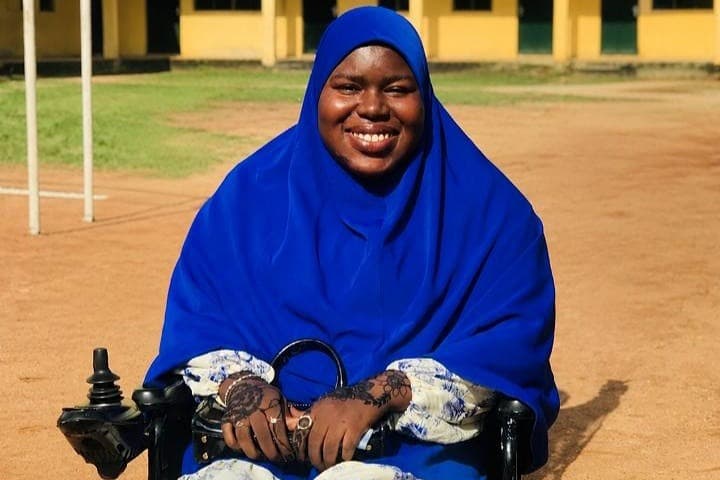
For Fatima Aderohunmu, an ambulatory wheelchair user, the realisation that there are more disabled people in Nigeria than she initially thought came slowly. An ambulatory wheelchair user is a person who can sometimes walk independently but uses a wheelchair for additional support and to manage pain and fatigue.
“If the world is accessible, it wouldn’t have been so surprising for me. Most people don’t know there are lots of ambulatory wheelchair users in Nigeria,” she said.
Her condition, muscular dystrophy, began when she was nine and has progressively weakened her muscles and upper- and lower-limb strength. The 27-year-old had little awareness of accessibility as a child; she began using a wheelchair only in 2018, once walking became too difficult.
“Many people battling similar conditions often think they have to lose their ability to function to become a wheelchair user. Some people don’t even want to talk about it due to the fear of what the world or their families may say,” she explained, though she does not have to worry about the reaction of family members as they have been very supportive and view it as a necessary tool to keep her alive.
She still draws stares in public, and once considered giving up the mobility aid altogether. “I remember abandoning it because I couldn’t accept the fact that this was going to be my new life and the fact that I won’t be able to walk, and the fear of what people would say about it. At one point, my parents had to encourage me. Despite having accepted the new me, which is life as a wheelchair user, inaccessibility still excludes me from participating in society. But still, my wheelchair has given me the confidence and opportunity to explore,” she said.
Fatima would rather miss an event than attend one that is inaccessible, however important it may be. “Even before my wheelchair, I avoid inaccessible spaces like banks. Every time I am in Ogun State, I don’t go to the bank and usually wait until I go to Lagos. But even in Lagos, I don’t think I have been to any bank that is fully accessible. Sometimes, they would have ramps, but the entrances are not accessible. If a place is not accessible, I would rather let a third party do the activity on my behalf if they can. I hate being in positions where people may have to help me carry my wheelchair,” she said.
Mobility aids are regarded as extensions of a disabled person’s body and should not be touched or handled without consent or consideration, but many people are not aware of that. Fatima said her parents’ house remains the only fully accessible place for her in her community, after her father had every entrance reconstructed to accommodate her.
Her experiences have led her to train as an accessibility consultant with the Association of Accessibility Professionals, and she hopes to one day build a consulting firm alongside the accessibility information platform.
A temporary affair
On the other hand, for some people like Salma Ja’eh, disability was a short-term but life-altering experience after an incident left her dependent on crutches for a while. The incident occurred at Murtala Square in Kaduna while she was riding a horse.
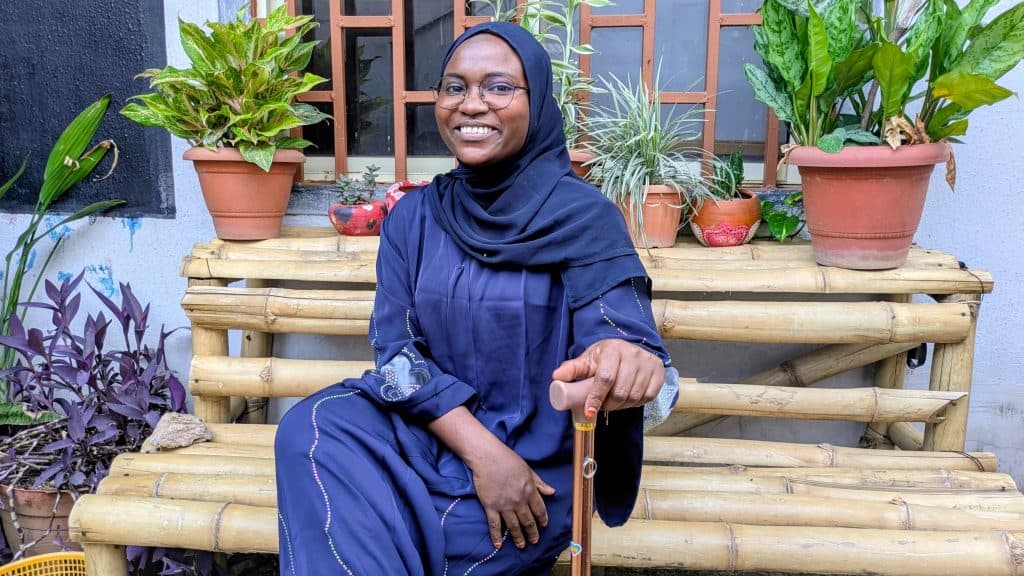
“Something must have spooked the horse, because it took off at an accelerated speed. The speed was too much, so I let go of the reins and must have fallen off in the meleè, and that was the beginning of my femur fracture journey,” she recalled.
After being rushed to a hospital, she was confronted with the failing healthcare system in the country. She found there were only three orthopaedic surgeons in Kaduna, and only one was available at that time. “I was placed on traction because the surgeon wasn’t available to perform the surgery that I needed as soon as possible,” she recounted. “[Eventually] the surgery was done, and I was discharged.”
Salma was excited to return home and to regain some normalcy. She got transferred to a wheelchair as they headed out, and that moment exposed inaccessibility for people living with disabilities to her. “The private hospital didn’t have ramps, and at multiple doors two people had to raise the wheelchair to pass a step or some form of door plank,” she said.
The limitation followed her home, where every entrance had a step or two. “I had to be carried by two different people into and out of the house,” she recounted. “This impacted my mental health severely. Even the door to the toilet had an elevated threshold, so I had to spend extra minutes using my crutches to navigate it. From there on, everywhere I look, I can’t help but see the severe lack of accessibility impacting independence; that means people have to be there to support or help you around.”
She slowly came to learn that the social barriers are just as limiting. It started with the reaction she got at home when she tried to go out. She didn’t mind being seen with a crutch, but her father was genuinely puzzled she wanted to go out in that situation.
“When I insisted on going out after three months of being at home, they said people would laugh at me. When I went outside, I got stared at, sometimes with pity prayers and a lot of people advising me to stay home until I was better. People often ask me what could be so important for me to step outside with a crutch,” she said. The experience further expanded her understanding of the stigma and discrimination that people with disability face.
One particular incident that stood out for her was when an older acquaintance seemed angry that she was moving around with a crutch at an event. “He’s a bit older than me, so maybe it’s his way of exercising his age over me. Still not sure. But he started fuming when he saw me walking about the centre with my crutches, talking about how I need to sit down and get better before gallivanting about. And how that was how I broke my leg. Now I need to focus on healing instead of being out and about.” She was stung and shocked by the experience.
People with disabilities often experience negative experiences on professional and personal levels, as a result of misconceptions, as well as negative sociocultural and religious beliefs, leading to name-calling, neglect, low self-esteem, depression, rejection, and isolation.
Even though she no longer needs to use a mobility aid, Salma said that the experience had forever changed something in her.
Your money or your life
For others, the cost of inaccessibility is measured less in stares than in time, money, and health lost to a system that refuses to accommodate them.
When Habiba Mahmoud* made her way to the bank one morning in 2025, after money was accidentally deducted, she ended up with a much bigger problem. “When I reported it, they repeatedly sent me back and forth between the bank and my school instead of resolving the issue,” she said. The incident caused her to make consistent movements between her school and the bank for three days, which exacerbated her health issues.
As a sickle cell anaemia patient, hours spent standing in queues — with no seating, no priority system, and no accommodation for people with chronic illnesses — made her ill and led to her being hospitalised for a week. Even that did not end her struggle.
“Even after my hospital stay, I had to return to continue pursuing the complaint. By then, I was so frustrated that I refused to join another queue and informed them that I would consider legal action for the losses and hardship their handling of the matter had caused. Ironically, once they finally took the complaint seriously, my money was returned within 24 hours. What could have been resolved in a day ended up costing me weeks of stress, repeated visits, and a hospital stay,” she recounted.
To navigate an unaccommodating system, Habiba has learned to pace herself and ration her energy carefully, calling ahead before visiting places, avoiding extreme weather, carrying medication and water, and relying on family and friends when needed.
“I have also learned to listen to my body,” she said. “If I am unwell, I cancel plans. If I become exhausted, I leave. Sometimes this means missing opportunities, but protecting my health has to come first. Living with sickle cell disease means constantly asking myself, ‘Do I have the energy for this?’ In many ways, that question shapes almost every decision I make,” she said.
Her lack of a visible impairment also often makes people dismiss her struggles. “What made me realise my environment was inaccessible was the constant assumption that I was fine because I looked healthy. People often did not see the challenges I was dealing with or understand that invisible disabilities require support too. Over time, I realised that accessibility is not just about physical spaces; it is also about awareness and understanding,” she said.
About four million Nigerians live with sickle cell anaemia, a genetic disorder that is rarely classified as a disability in the country because of the stigma attached to the term. In the United States, by contrast, sickle cell is not recognised as a disability, but patients can still access disability benefits and legal protection from discrimination.
Habiba has no difficulty accessing toilets, but the scarcity of seats in public spaces, paired with poor awareness, still shapes her daily life. On some days, the 24-year-old uses a walking stick or ambulatory wheelchair to help her move around. This is known as a dynamic disability, which presents differently and fluctuates in its impact and severity across circumstances. During a ‘crisis’ or ‘flare-up’, even basic tasks become considerably harder.
Habiba’s struggles, like those of other people with disability living in Nigeria, persist as they try to find balance in a system that offers inadequate legal protection, inaccessible environments, and, still, too little public understanding.
Support Our Journalism
There are millions of ordinary people affected by conflict in Africa whose stories are missing in the mainstream media. HumAngle is determined to tell those challenging and under-reported stories, hoping that the people impacted by these conflicts will find the safety and security they deserve.
To ensure that we continue to provide public service coverage, we have a small favour to ask you. We want you to be part of our journalistic endeavour by contributing a token to us.
Your donation will further promote a robust, free, and independent media.