Terrorism Empties Rural Markets in Nigeria’s North West
Market closures driven by years of terrorism have hollowed out entire local economies in Katsina and Zamfara, in northwestern Nigeria. We spoke to traders and residents who have since fled the affected communities to safer locations.
Listen to this story
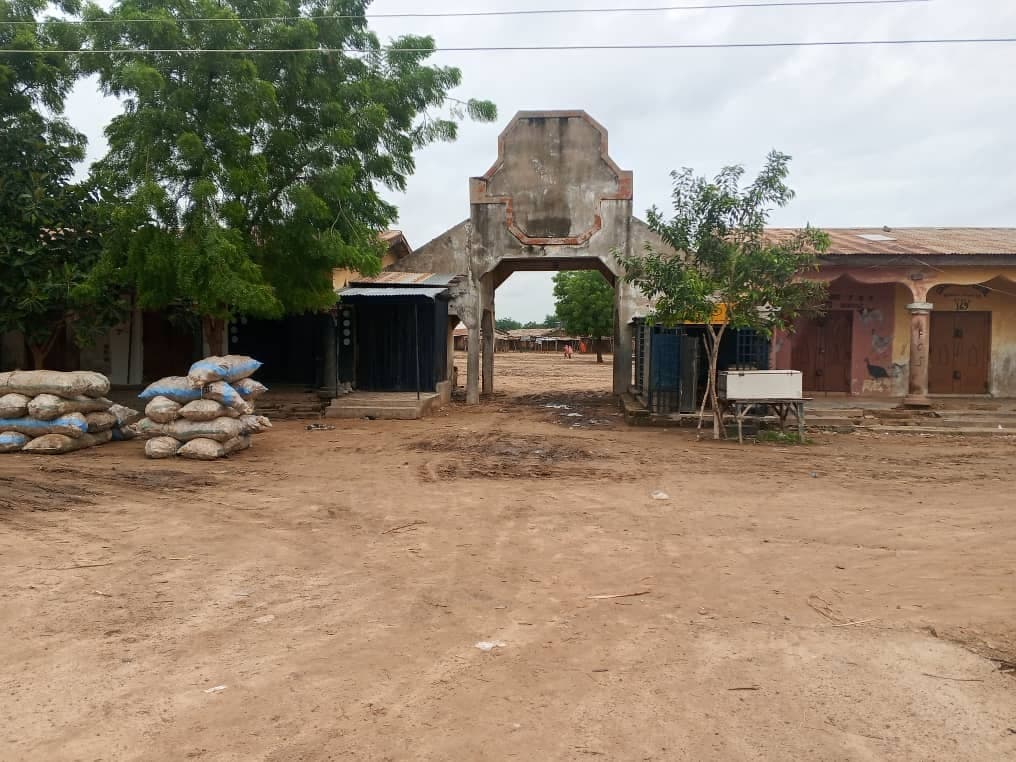


The maize was still fresh from the truck when the terrorists came for it.
A day earlier, Aminu Idris had travelled to Sabuwa Market in Katsina State, in Nigeria’s North West, to restock his business, a journey of about four hours from his home in Shekewa, Batsari Local Government Area. The merchant still recalls every detail, including the price of the goods. He bought 50 bags of maize for ₦14,000 each, paying another ₦2,000 to have each bag hauled to his village. He stored the grain in a shop inside his family compound, where he lived with his wife and six children while running his business. Before nightfall, he had already sold 10 bags to regular customers.
The remaining 40 bags never reached another market day.
On a Tuesday night in Jan. 2019, Aminu and his family were fast asleep when the gunfire started.
“Pap-pap-pap-pap-pap,” he says. “There were gunshots from all directions.”
As the terrorists overran the village, Aminu hid, pressing himself against a wall in the darkness while the shooting continued around him. By the time the Fajr prayer ended at about 5:00 a.m., his shop had been emptied. The remaining bags of maize were gone, loaded onto motorcycles by men he could not recognise. So were the biscuits, soft drinks, measuring bowls, and every other item in the store.
The attack claimed lives and livelihoods. Alhaji Muhammadu, his neighbour and business partner, was killed. So was his nephew, Alhaji Musa. When the gunfire subsided, Aminu fled, knowing that men are often targeted in such attacks.
Residents had earlier alerted the Divisional Police Officer about the impending attack, and some officers were sent to repel the terrorists, but they were outgunned. Two police inspectors were killed during the attack.
Aminu attributes his safety to divine intervention. He remembers having a chronic cough that week, one that should have betrayed him in the dark. He says God miraculously took it from him at the exact moment his life depended on his silence.
“If not for God’s protection, for instance, I wouldn’t be here talking to you today. I wouldn’t even be alive, because they would have finished with me,” he told HumAngle.
The following day, he borrowed a motorcycle, returned to Shekewa to pick up his wife and children, and then took them to Batsari, where they have since stayed.
Aminu was among the many residents who never returned to live in Shekewa after that night. Others fled too, and with them went the customers, traders, and farmers who sustained the local economy. Shekewa Market died, in a very real sense.
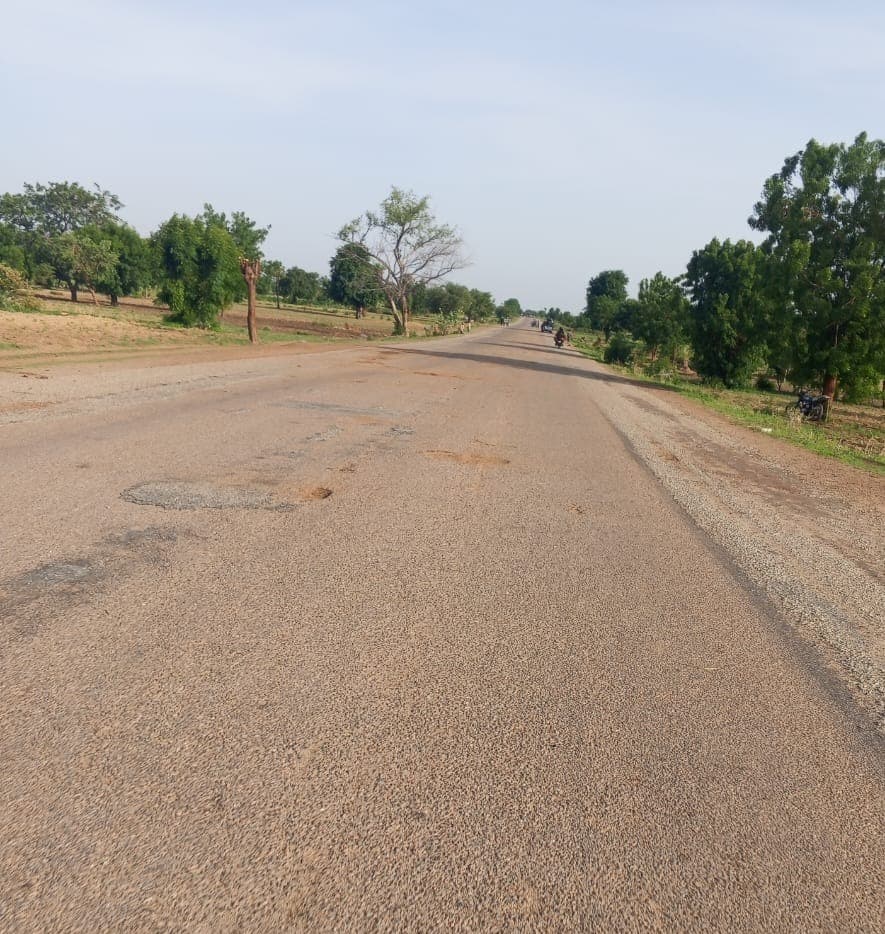
This is just one story among many across the northwestern region.
Since 2013, armed groups have taken over large stretches of forest and farmland where Katsina, Zamfara, and Sokoto states meet, and rural life across that region has suffered the same way. In these communities, weekly markets are the backbone of the whole local economy. It is where a farmer’s extra crops turn into school fees and where one weekly market gathering can be the closest thing to a bank for miles around. So when the market shuts down, everything that depends on it shuts down too.
Rural economies amidst terror attacks
Like many nations, Nigeria’s food security depends on its rural areas. Farmers who provide food and traders who move goods from market to market are essential to keeping the economy running.
“Rural economies feed the country and employ people,” said Kehinde Giwa, a security analyst at SBM Intelligence. “Farms in villages grow food like grains, vegetables, and livestock that go to city markets. Rural traders move those goods. It also gives jobs to youth, reduces migration to cities, and brings money into local communities. When rural areas do well, food prices stay stable, and the whole country is stronger.”
However, the people in these rural economies are the most vulnerable to terrorism that has enveloped the North West for over a decade. Katsina and Zamfara, two states at the centre of the crisis, have recorded repeated attacks on markets. Many rural roads are also not safe for traders, with attacks claiming lives and leaving others abducted or injured while on their way to conduct trading activities in the market.
Data from the Armed Conflict Location & Event Data (ACLED) show that between 2021 and 2025, 35 market-related attacks across Katsina and Zamfara resulted in 177 fatalities.
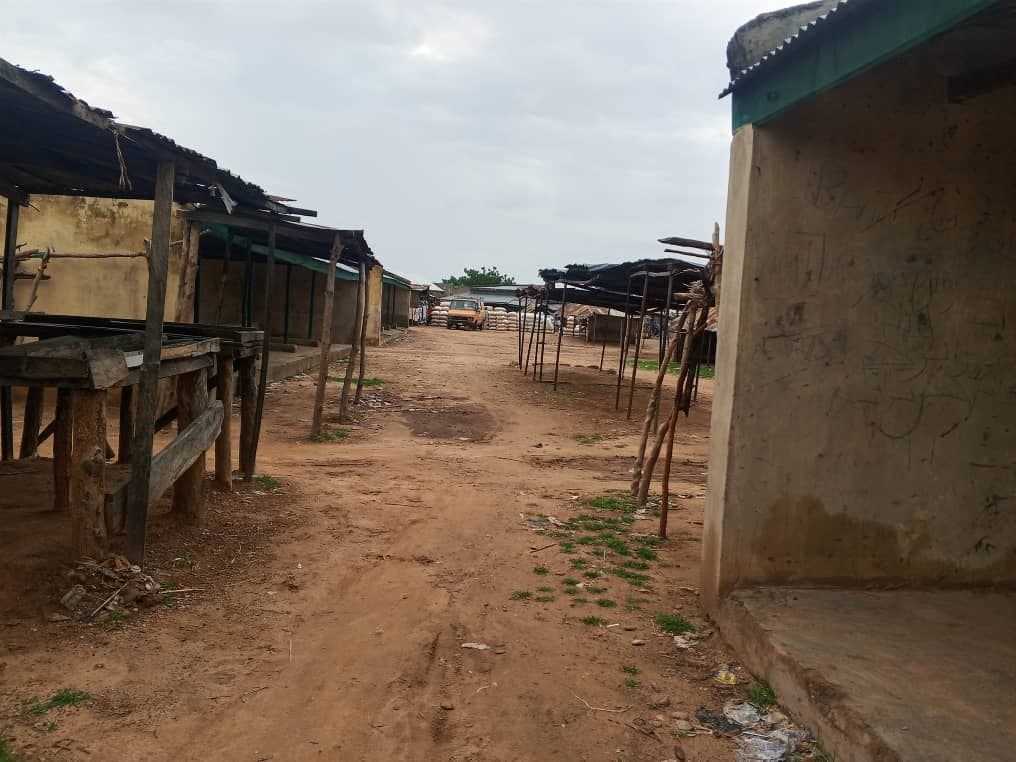
In Katsina, attacks on traders and markets have become a recurring feature of rural commerce. In 2022, three traders were killed in Yantumaki Market, while another attack occurred at Yandaka Market in the same year. In 2023, eight traders from Kukar Babangida were killed while travelling on the road. In 2024, eight traders were ambushed and killed while returning home from Yantumaki Market. In 2025, nine traders were killed, and several vehicles were burnt when terrorists attacked traders returning from Jibia Market. In April 2026, three traders were killed in an attack on Jikamshi Market. The following month, 10 traders were killed at Guga Grain Market in Bakori. In July 2026, nine traders returning from Bakori were abducted.
It is no different in Zamfara. In 2023, terrorists abducted several traders travelling to Bagega Market. In December 2025, 20 traders were abducted while returning from Gurusu Market. Later that month, a convoy of traders returning from Magami Market struck an improvised explosive device, killing seven traders in the resulting blast. In May 2026, terrorists attempted to take over trading activities at Bagega, but security forces foiled the attack.
Trading activity has either stopped or declined in most of these markets. And for traders who survived the attacks, the scars remain.
‘Terror attacks empty the market and the roads,” Kehinde noted. “Traders stop going because of attacks, so goods don’t move and incomes drop. Farmers either pay levies to access their land or stop farming completely. Shops are looted, vehicles are burnt with traders inside, and roads become too risky. With fewer people farming and trading, food becomes scarce and more expensive.”
A market that once drew buyers from Lagos
Shekewa Market once drew traders from as far as Lagos in southwestern Nigeria, attracting buyers for its livestock and watermelon. Today, it is now a ghost market.
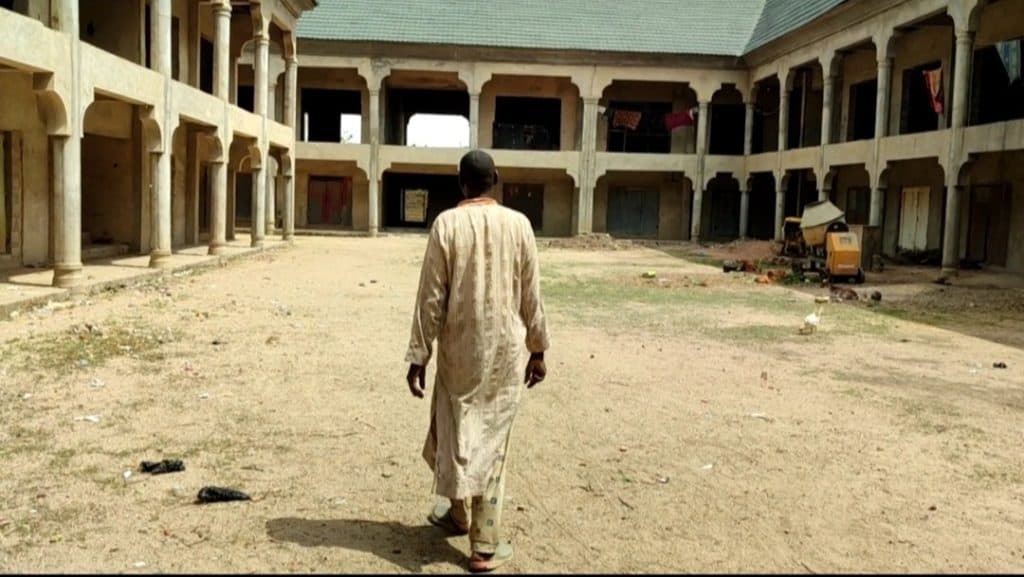
Malam Bello, who asked that his real name be withheld, was among the men who built their livelihoods around the market. On a good Friday, he says, he could earn anywhere from ₦50,000 to ₦300,000 selling watermelon that he grew himself. When asked to estimate his total losses since the market closed, he went quiet and exhaled.
“Only God knows the exact amount of what was lost,” he said.
Bello left Shekewa about eight years ago because of a series of violent incidents. He experienced night raids that swept through Batsari, Safana, and Danmusa simultaneously, turning an entire axis of Katsina into a landscape of locked doors and cancelled markets. His brother, Lawal, was shot returning home on a motorcycle after dropping off a passenger. Bello recites, almost apologetically, the Islamic principle that a man with a family is permitted to flee for his life. He said around 10 to 12 people from his settlement made the same calculation around the same time, scattering into towns like Batsari that had, until then, simply been somewhere else.
Yet, he has never let go of Shekewa. He speaks of it with longing and nostalgia, but does not see himself returning anytime soon.
“My brothers have started returning to the market,” he says, adding that he only hopes he will be back to his base anytime it returns peacefully.
A road no one trusts again
Nearly 200 kilometres northwest of Katsina, in Zamfara’s Kaura Namoda axis, Nazifi Abubakar Kaura tells a version of the same story.
He stopped travelling to Shinkafi Market the day the state government, under the administration of then-Governor Bello Matawalle, ordered it shut as part of a security strategy that treated rural markets as terrorists’ supply chains before it treated them as anyone’s livelihood. He simply never went back, even after the order was formally lifted.
“I am apprehensive about the road,” he told HumAngle.
He does not, even now, know the current condition of the road to Shinkafi. It is a small but devastating admission, because it illustrates how an entire route has been erased by the compounding weight of fear accumulated over years.
Nazifi had options, and he took them. He shifted from kitchenware to trading in textiles in Kaura Town, and describes himself, not unkindly, as settled. But he is insistent that his own adaptability should not be mistaken for the market’s recovery.
“There are many people like me who stopped going, and it has really affected them,” he says.
Nazifi explains that the economy now runs on desperation rather than demand. Traders travel to Shinkafi not because business is good, but because they are, in his words, “forced to”, spending money on transport and returning with unsold goods, because too few customers now attend the market.
Despite all that, even the journey to the market has been reorganised around the terrorists’ schedule rather than the traders’. Nazifi describes rushing to beat a self-imposed curfew to travel from Kasuwar Daji Market back to Kaura before evening, because terrorists are known to wait near the Sabon Gari entrance after dark.
Empty markets, broken traders
Until recently, Shinkafi Market had traders from the Niger Republic and other parts of Nigeria. Today, it is a shadow of itself, as traders and customers who patronise the market stay away for fear of becoming victims of terror attacks. Before terrorism engulfed the area, three markets — Shinkafi Market, Galadi Market, and the one in Jangeru — drew large numbers of traders every week. Residents could find virtually every commodity they wanted; traders smiled to the bank. That is no longer the case.
Sagir Aliyu Nega, a 34-year-old grain dealer, said, “Armed banditry has significantly contributed to our collective loss, so much so that even our customers boycott us over incessant increases in prices of commodities, goods and services due to the absence of village dwellers in the market and the inability to travel to villages to purchase goods. Before a week round for a market day, I personally used to visit more than 15 villages buying sacks and bags of rice and farmlands for packaging. Now, no one dares travel to those hard-to-reach communities.”
In western Zamfara, the decline of Bagega Market began gradually. The livestock section was the first to suffer after the state government shut down other local livestock markets to prevent terrorists from using them for commercial transactions. Although Bagega Market – one of the busiest in western Zamfara – remained open, its fortunes continued to decline as terrorists made the Anka – Bagega road increasingly dangerous.
‘The last time we saw anyone come to patronise the market here (Bagega) was when they (terrorists) attacked the community, burnt down the soldiers’ base and stole foodstuff in the market,” said a market leader in Bagega, who asked not to be named as he works for the Anka Local Government Council and is not authorised to speak.
He could not estimate his financial losses, but the heaviness in his voice was obvious as he reeled out what has been affected: both the local and state governments lose revenues because no one comes to the market. Traders can’t bring their goods to sell, residents can’t make purchases, and hawkers selling cooked food to traders are losing out, just as commercial drivers have been left without passengers or freight to transport.
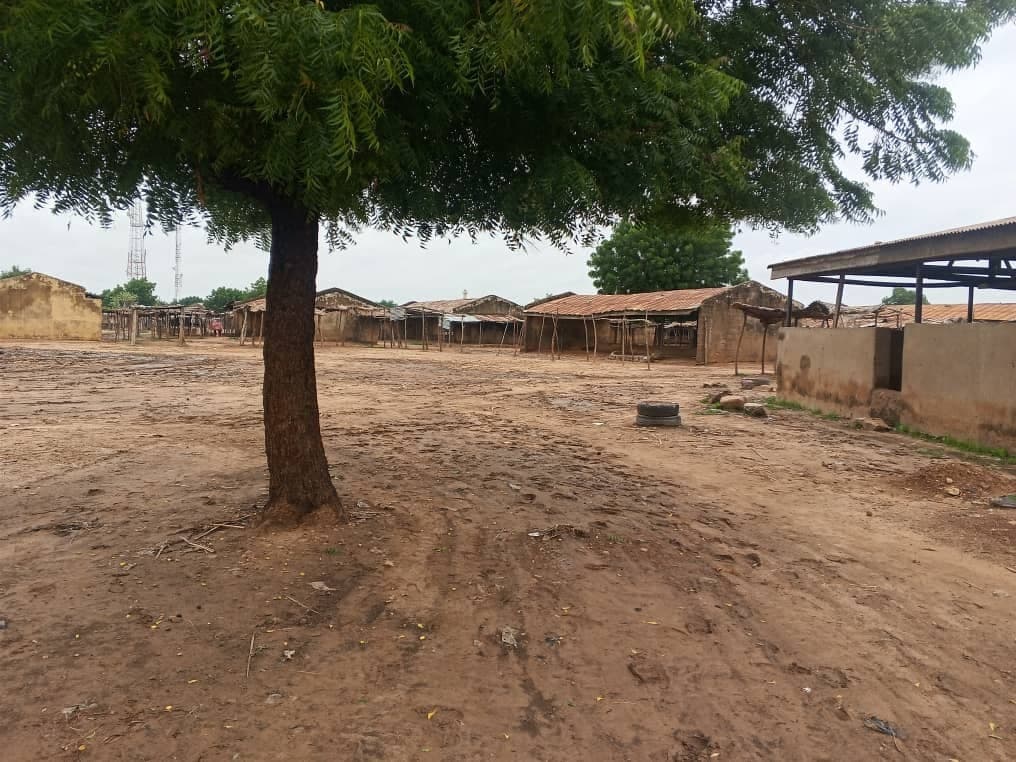
“Dangulbi Town used to be filled with thousands of market visitors and travellers from Kaduna, Niger, Kano, Katsina, and Kebbi states on Sundays for trading activities. When attacks intensified, travellers from the neighbouring states stopped attending the market for five years now. This made many business merchants relocate and move their wealth and commodities to safer locations. As a result, hundreds of youths are now jobless,” Abdulaziz Dangulbi, chairperson of potato farmers in the area, told HumAngle.
What the data reveals
For this report, HumAngle analysed five calendar years of ACLED data, covering the period from 2021 to 2025. The dataset includes marketplace incidents ranging from attacks by armed non-state groups to actions involving state forces, such as the Nigerian military airstrike in Zamfara. It also records abductions, armed clashes, and looting linked to markets, market days, or journeys to and from markets.
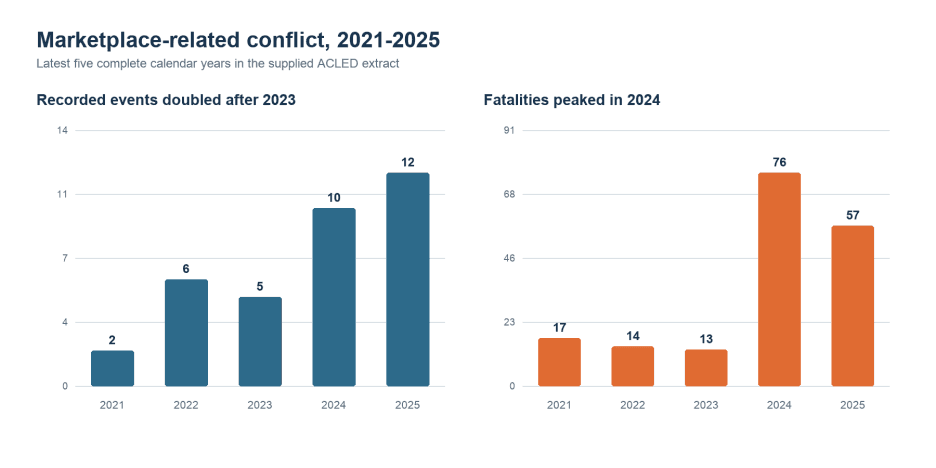
Of the 35 recorded incidents, only 19 are coded as direct attacks. However, the dataset records 35 conflict events that resulted in at least 177 fatalities. The number of recorded events rose from five in 2023 to 10 in 2024, and 12 in 2025. This made 2025 the busiest year in the five-year period, even though it was not the deadliest, largely because many residents had already abandoned the affected communities.
Similarly, fatalities rose from 13 in 2023 to 76 in 2024, before falling to 57 in 2025. The 2024 peak reflected both more incidents and several highly lethal attacks and clashes, including 22 deaths near Yan Tumaki and 18 at Gangara Market.
Based on the data, Zamfara recorded 19 events and 59 fatalities, while Katsina recorded 16 events but 118 fatalities, exactly twice Zamfara’s toll. The difference was caused by several high-casualty Katsina incidents rather than a larger number of records.
Who are the actors?
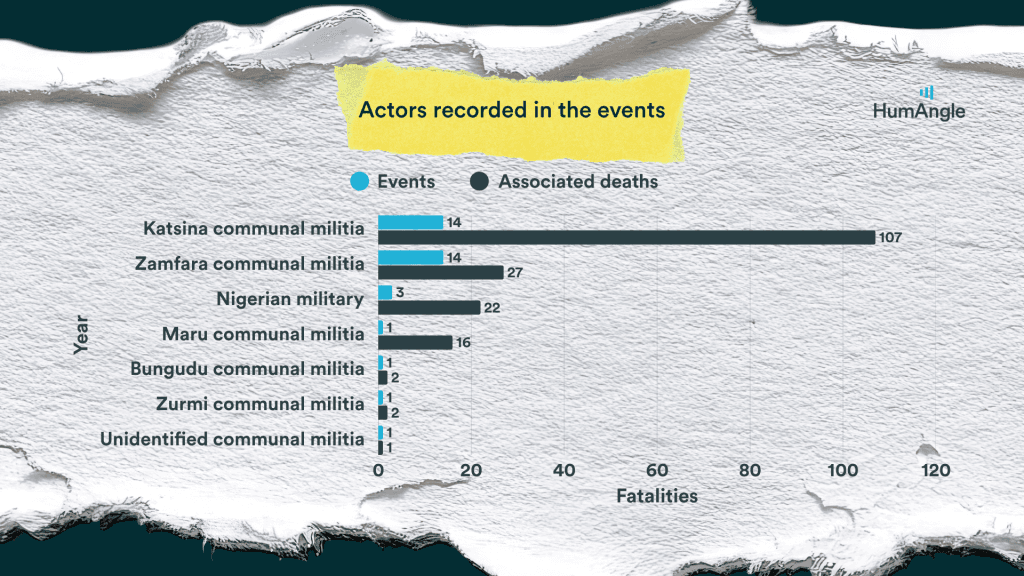
The actors identified in the examined ACLED record do not imply culpability. The ‘Actor 1’ column simply records the primary group associated with an incident, whether a government force or a non-state actor. Identity militias, for instance, often have locally known names that translate to “community protection guards”, and appear in the Actor 1 field under multiple labels. Collectively, they were associated with 32 separate events across the two states.
The Katsina and Zamfara communal militia labels each appear 14 times, but the events associated with the Katsina label accounted for 107 fatalities, compared with 27 linked to the Zamfara label.
Where the incidents happen.
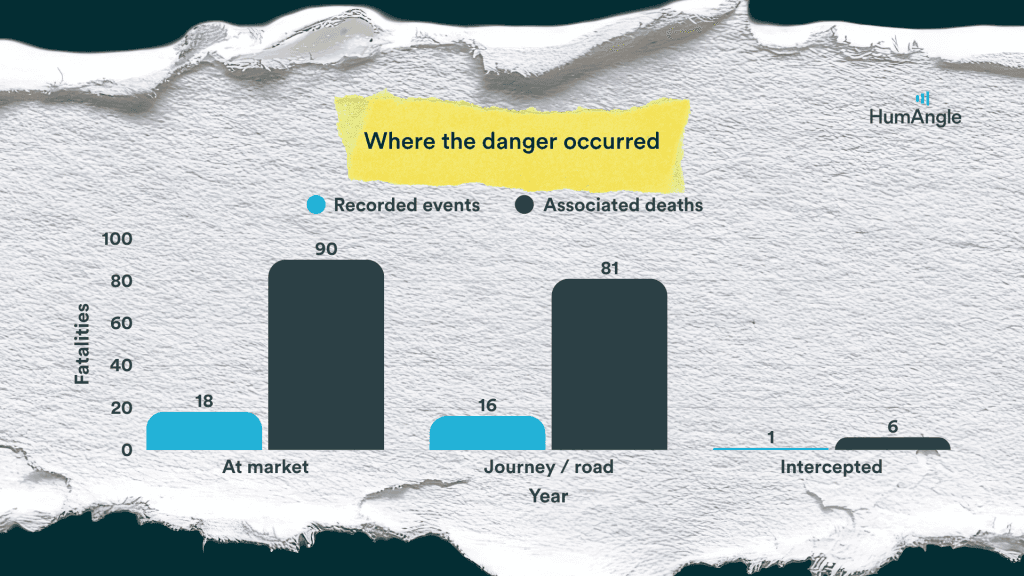
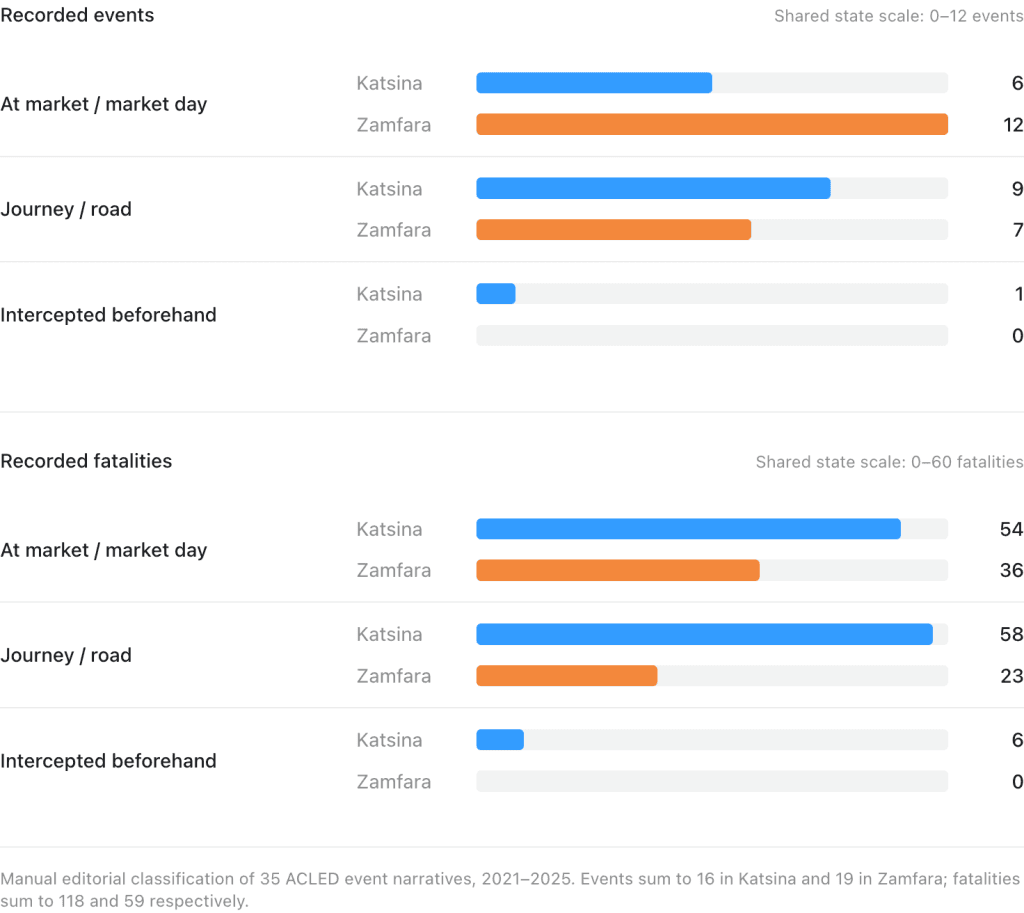
We dug deeper into the ACLED data, and another interesting finding in the records is where these incidents happened. Eighteen incidents took place at a market or during an explicitly described market-day activity. Another 16 struck traders, commuters, escorts, or other travellers going to or returning from a market. One planned market attack was intercepted before the assailants reached it.
The market or market-day group recorded 90 fatalities across the two states, compared with 81 deaths on market journeys. This suggests that insecurity is not confined to market spaces themselves, but also extends to the roads connecting them, exposing traders and customers to significant risk before they even reach their destinations.
In Katsina, most fatalities were concentrated on journeys to and from markets, whereas Zamfara recorded a greater share of incidents within markets or during market-day activities.
Major incidents
The three deadliest incidents alone accounted for 65 deaths, representing 36.7 per cent of all fatalities recorded during the five-year study period.
Date Place Subtype Fatalities What happened Jan. 7, 2025 Baure, Safana Armed clash 25 Market-day ambush; coded range began at 25 Jan. 5, 2024 Yan Tumaki, Dan-Musa Armed clash 22 Traders and police caught in road clash Mar. 9, 2024 Gangara, Jibia Attack 18 Indiscriminate market shooting Apr. 16, 2021 Dan Sadau, Maru Attack 16 Reprisal at a Fulani cattle market Sept. 11, 2025 Wonaka, Gusau Armed clash 11 Ambush on a market-bound convoy
2026 so far
To understand whether the trend has continued, HumAngle also analysed the available data for the first half of 2026, outside the five-year study period.
ACLED’s market-focused extract records 13 marketplace-related conflict events in Katsina and Zamfara between Jan. 1 and June 30, resulting in 68 fatalities. This is the highest first-half incident count in the comparable 2021–2026 series, up from nine during the same period in 2025.
Fatalities were almost identical to those recorded during the first half of 2024 (68, compared with 69), but the 2026 toll was heavily concentrated in a handful of major incidents. The most significant was the May 10 military airstrike on Tunfa Market, which accounted for 53 deaths, 78 per cent of all recorded fatalities during the period.
Without that airstrike incident, the remaining 12 events recorded 15 fatalities. Zamfara accounted for nine incidents and 66 deaths, compared with four incidents and two deaths in Katsina.
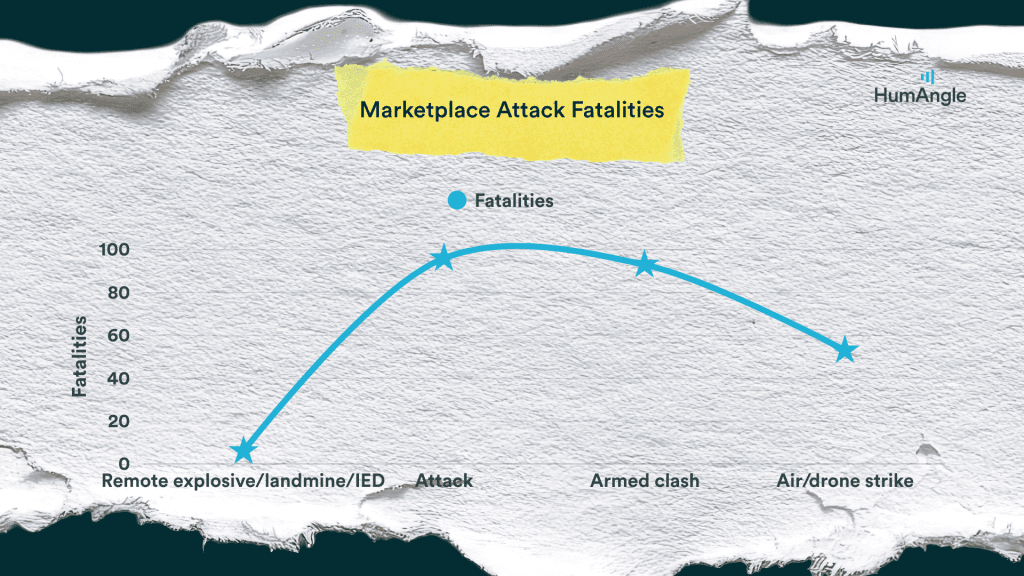
A closer review showed seven incidents on market journeys and six at markets or during market-day activities. The 2026 records also included an IED attack and an airstrike, indicating a broader incidence range beyond the attacks, abductions, clashes and looting that dominated earlier years.
‘Unsafe to visit’
Beyond what the incident data say, we sought to understand what these patterns meant for weekly markets from the perspective of local communities. Over months of observation, we documented these threats faced by weekly markets across the two states using the local context of the attack conditions and associated reports.
We followed the incidents, scaled and measured the impact of threats in various markets, and designated them based on severity colours. Markets such as Bakura, Birnin Tudu in Zamfara, as well as Musawa and Bakori in Katsina, received a green rating, indicating relative safety despite their proximity to areas affected by insecurity. Markets assigned a yellow rating occupy the middle group between relative safety and high risk. This includes Dandume and Kakumi in Katsina, and Wanke and Gora in Zamfara, where trading activity continues despite persistent security concerns.
At the highest-risk end of the scale are markets such as Nahuce, Sabon Birnin Dan Ali, Magami, Guga, Jikamshi, and Yandaka. These locations remain the least safe to visit and have borne the brunt of the economic decline caused by prolonged insecurity. Although some trading activity continues, the constant threat of attack has reduced commercial activity, disrupted livelihoods, and discouraged both traders and customers from returning.
Support Our Journalism
There are millions of ordinary people affected by conflict in Africa whose stories are missing in the mainstream media. HumAngle is determined to tell those challenging and under-reported stories, hoping that the people impacted by these conflicts will find the safety and security they deserve.
To ensure that we continue to provide public service coverage, we have a small favour to ask you. We want you to be part of our journalistic endeavour by contributing a token to us.
Your donation will further promote a robust, free, and independent media.
Comments
0 comments
No comments yet.
Sign in to join the discussion.
Of course, we want our exclusive stories to reach as many people as possible and would appreciate it if you republish them. We only ask that you properly attribute to HumAngle, generally including the author's name, a link to the publication and a line of acknowledgement.