Over 2100 Cholera Cases and 137 Deaths Recorded in Chad
The Chadian Ministry of Health has raised concerns about the alarming spread of the Cholera outbreak in the country.
Listen to this story

20 Sept 2025
The Chadian Ministry of Public Health and Prevention has announced there are over 2,100 recorded cases of cholera in the country, adding that the disease is spreading in three provinces. The announcement was made yesterday, Sept. 19.
Since announcing the discovery of thefirst suspected cases of the disease on July 13, followed by the confirmation of the Vibrio cholerae 01 Ogawa on July 24, Chad has been facing a persistent spread of the disease with 2,134 total cases recorded, including 74 confirmed cases after laboratory analysis.
There have been 137 deaths attributed to the outbreak, bringing the fatality rate to 6.8 per cent. Women are the most affected, with the age groups of 5–14 and 15–44 representing more than 64 per cent of the cases.
The provinces where the disease is very active are Ouaddai, Sila, and Guera, with nine health districts affected, notably Chokoyane, Hadjer Hadid, and Bitkine.
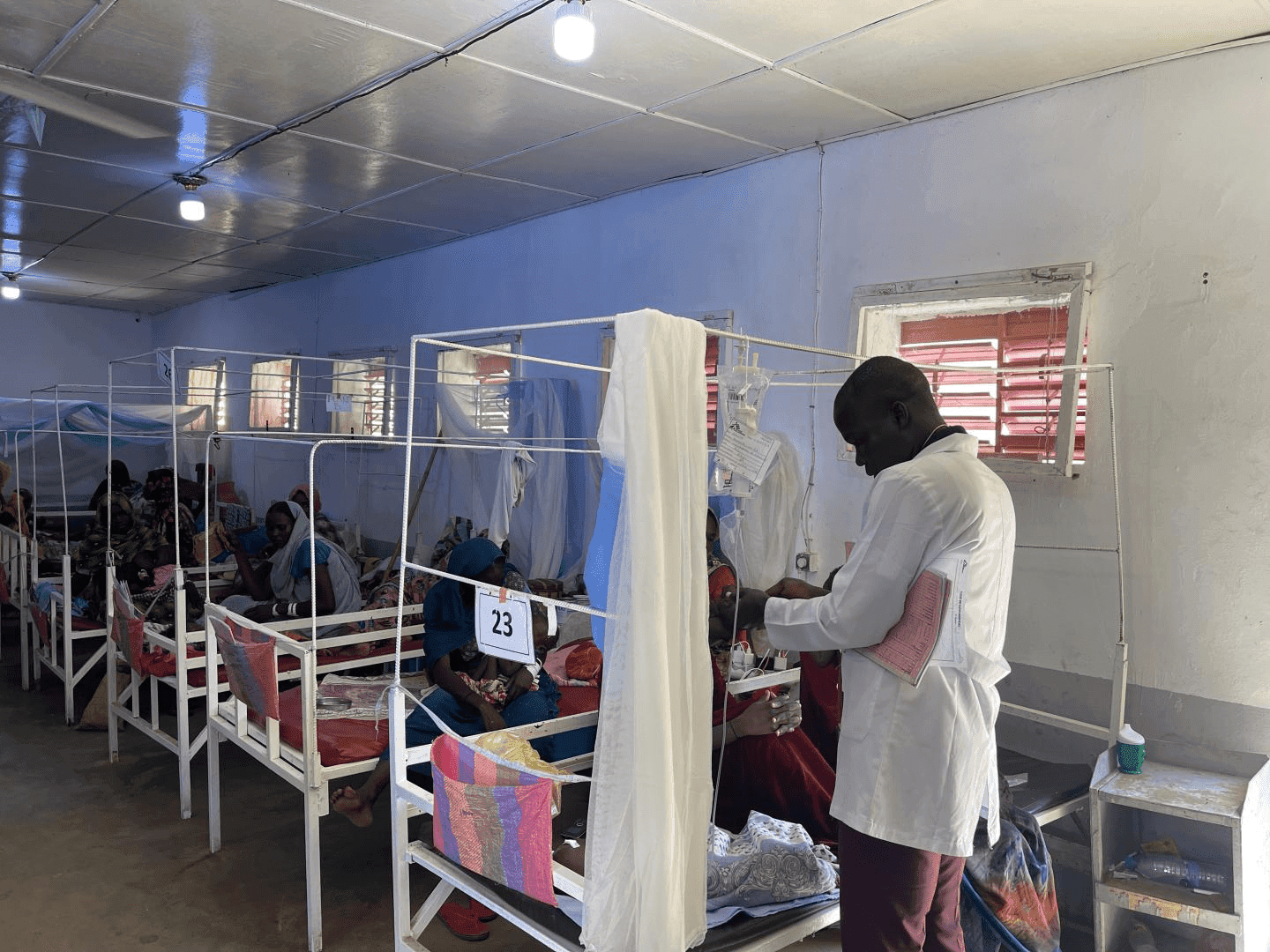
The national authorities, supported by the World Health Organisation (WHO), the United Nations International Children’s Emergency Fund (UNICEF), and other partners, have been working on the installation of choleric beds and reinforcement of treatment units, distribution of doxycycline and the purification of water, and the disinfection of houses and community sensitisation in the affected zones. The authorities are also preparing to start a vaccination campaign in the districts of Abeche, Abdi and Goz Beida, with an extension envisaged to Bitkine.
In spite of these efforts, several obstacles complicate the response measures, including insufficient equipment such as tents, adapted beds, protection kits, a lack of qualified personnel, and weak participation of certain partners, defecation in open areas, insecure funerals and gatherings that favour the transmission of the disease, as well as difficult access to affected zones.
The Ministry of Public Health emphasised that cholera is transmitted through water or contaminated food, and to protect against it, the systematic washing of hands with water and soap, drinking only pipe-borne or boiled water, and washing fruits and vegetables before consumption are recommended. The population is also advised to avoid eating roadside food and to report cases of acute diarrhoea immediately to health facilities.
Support Our Journalism
There are millions of ordinary people affected by conflict in Africa whose stories are missing in the mainstream media. HumAngle is determined to tell those challenging and under-reported stories, hoping that the people impacted by these conflicts will find the safety and security they deserve.
To ensure that we continue to provide public service coverage, we have a small favour to ask you. We want you to be part of our journalistic endeavour by contributing a token to us.
Your donation will further promote a robust, free, and independent media.
Comments
0 comments
No comments yet.
Sign in to join the discussion.
Of course, we want our exclusive stories to reach as many people as possible and would appreciate it if you republish them. We only ask that you properly attribute to HumAngle, generally including the author's name, a link to the publication and a line of acknowledgement.