New Gold Discovery Threatens Farmers’ Livelihood in Nigeria’s Capital
When a gold deposit was found while digging a pit in an agricultural community in Abuja, locals flocked in to claim their share, disrupting farming activities.
Listen to this story

7 Aug 2026
Agbada Babakarma prides himself as a rural farmer on the edge of Abuja, North Central Nigeria. Now in his fifties, Agbada has farmed for over three decades, working tirelessly in the Gwagwalada area of the Federal Capital Territory (FCT). But a newly found treasure trove in his neighbourhood is costing him his livelihood and sweat.
A year ago, gold was suddenly discovered near his farmland in Gwagwalada, causing a wave of illegal mining activities and threatening the livelihood of local farmers working on the sites. The gold rush seems to have brought prosperity for a few people – especially illegal miners in the locality – but it has equally created a growing crisis for over 50 farmers. The mad rush for gold has displaced small-scale farmers like Agbada, as farm fields have turned into mining pits.
“Every morning during the rainy season, I would report here before the sun rises,” Agbada told HumAngle, pointing to the stretch of soil where millet stalks once stood tall. “These farms have fed my children, clothed them, and even paid their school fees.”
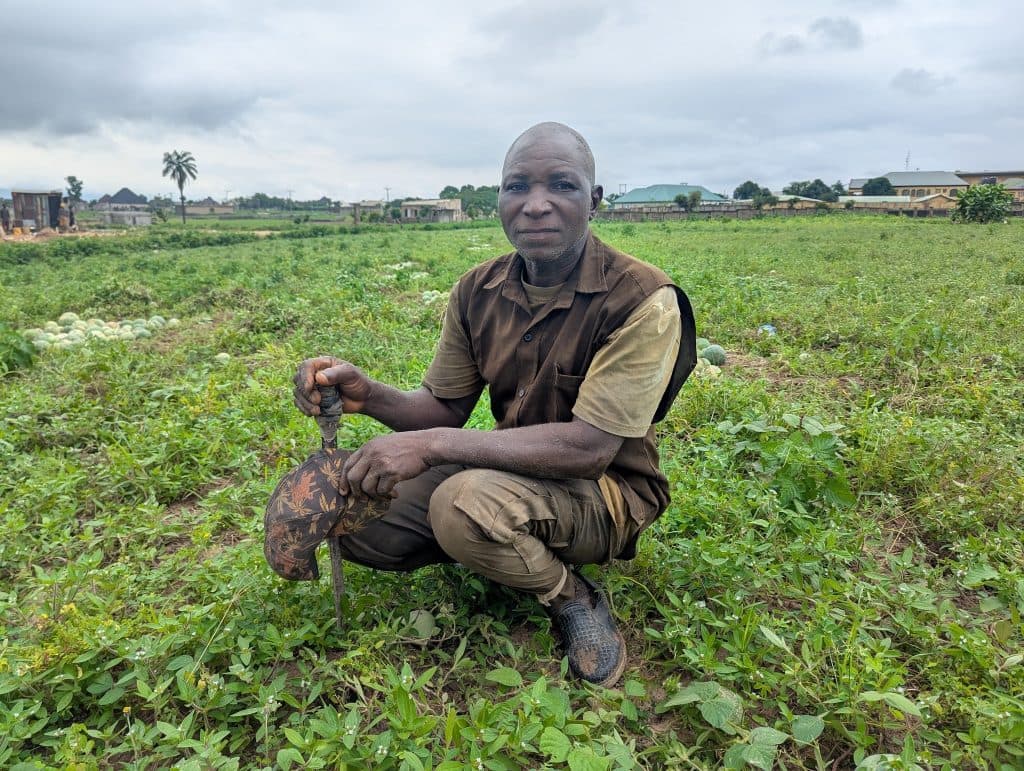
His routine was simple but consistent throughout the season, until it was disrupted by illegal miners. At dawn, he would walk from his home to the farm, carrying his hoe and cutlass, and managing his crop daily to ensure high yield. The rainy season is his busiest time. He plants corn, millet, groundnuts, and beans – crops that he sometimes sells and also uses to sustain his family through the dry months. By harvest, his granaries are filled and his household secure. However, the rural farming routine sustaining him and his family has now been taken away by local miners turning a vast farming area into a mining site.
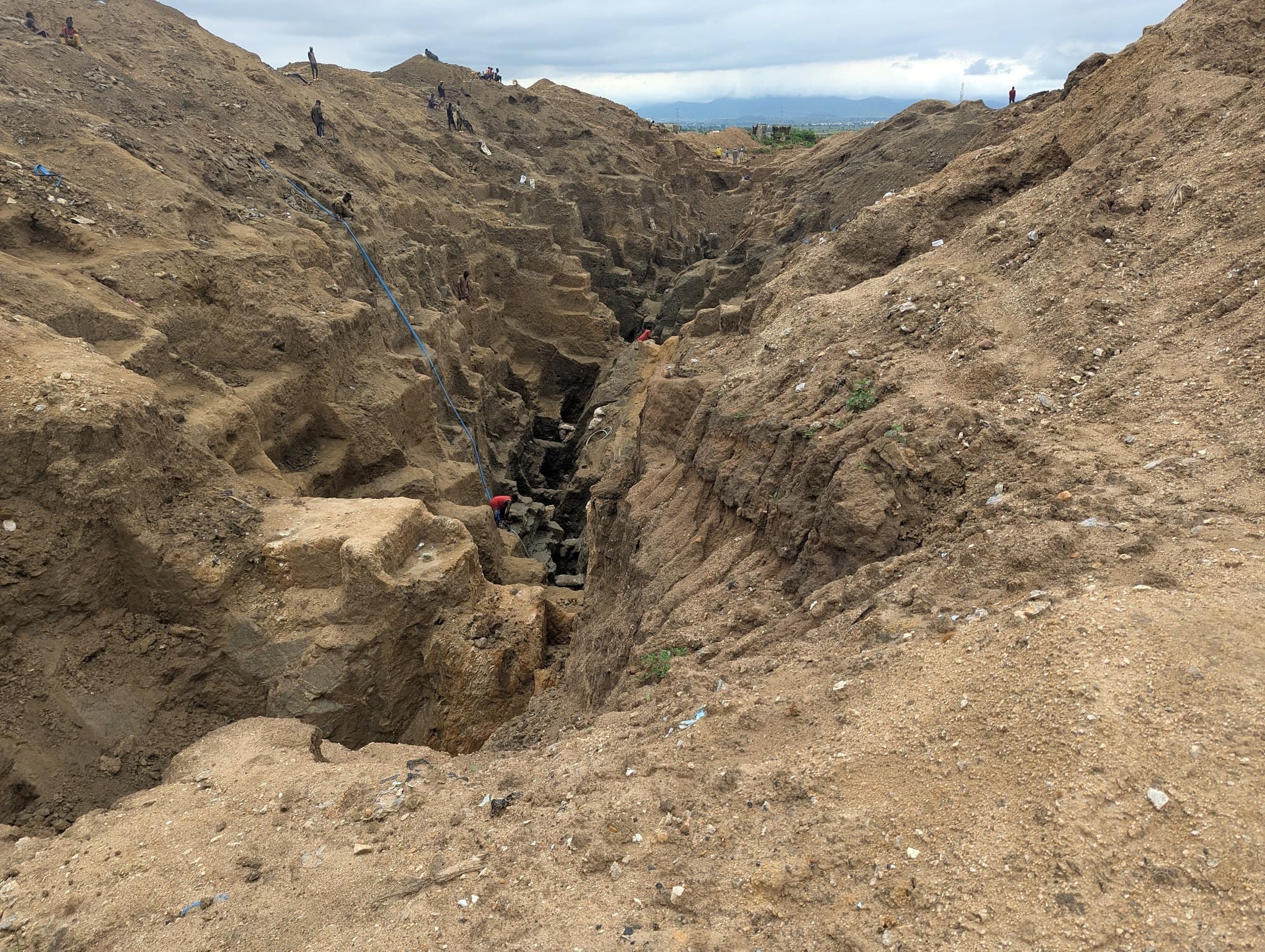
When the gold rush erupted in Gwagwalada, Agbada’s farm and those of other farmers suddenly became battlegrounds. Illegal miners, including women and children, armed with shovels, diggers, and sacks, invaded their lands, tearing through the soil, uprooting crops, and leaving behind gaping pits. The farmers watch helplessly as strangers dismantle what they had built over decades.
“They came like ants,” he laments bitterly. “On that day, I saw a group of women and children digging near my farm. There were so many of them that even if I shouted, no one would listen to me.”
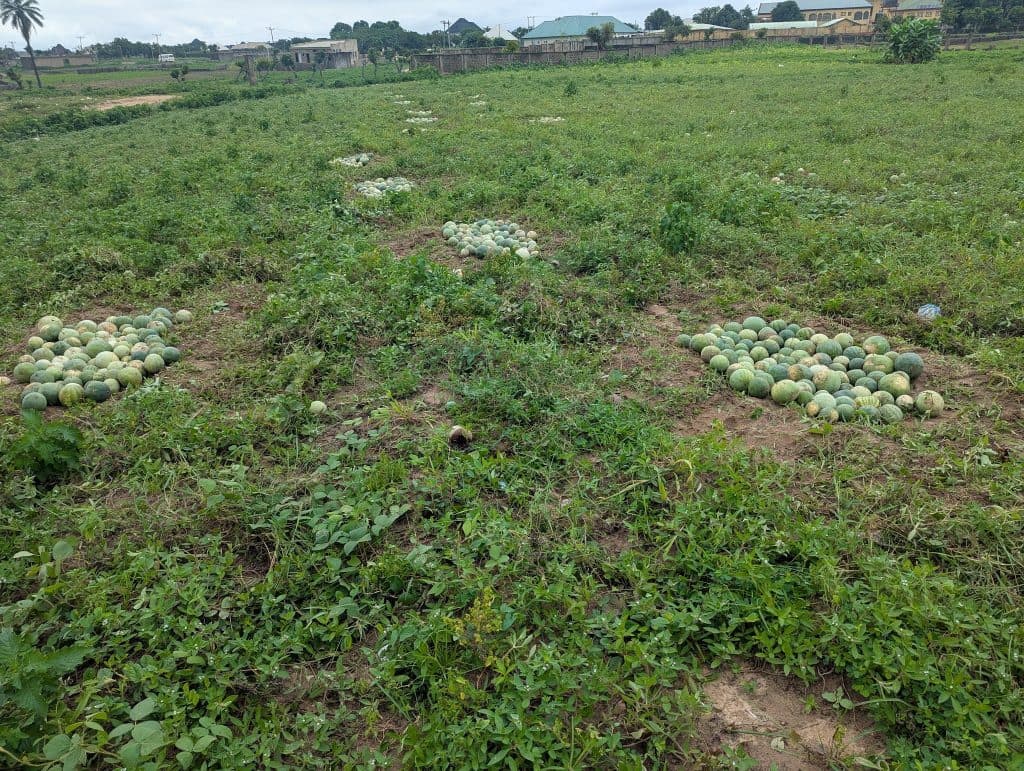
The locals swarming the area would later reduce his millet fields to mounds of dirt. His groundnut beds became trenches, and even the pathways he had carved with his footsteps were erased. He said the loss has drained him emotionally, as he feels displaced in his own land.
“Even while they were still mining on our farmlands every morning, I go there not to plant; I just sit and watch, feeling useless. Throughout last year, I didn’t harvest even a seed of grain. I was surviving on support from friends and families who had farmlands elsewhere,” he told HumAngle.
Illegal mining in Gwagwalda not only robbed him and other farmers of their livelihoods but also disrupted the community. Farmlands meant to feed families and plots intended for shelters have been ravaged as illegal miners continue to dig recklessly, leaving behind dangerous craters. Agbada’s remaining piece of land is constantly under threat as miners dig through it at night, while cattle herders allow their livestock to trample his millet and melon during the day.
“When farmlands are destroyed, food production in the area will likely drop, affecting local food supply and prices, and families who once relied on their harvests for sustenance will now bear the consequences of food insecurity,” said Abbas Idris, the president of the Risk Managers Society of Nigeria (RIMSON).
How it all began
The gold rush in Gwagwalada did not begin with a grand discovery. It started with something quite ordinary: a soakaway construction. In August last year, a certain family was building a new house close to the farming area. They hired labourers to dig an eight-foot soakaway. As the men dug deeper, they struck a chunk of gold stuck in the ditch.
“Immediately after they dug the gold, they fled, leaving their tools in the compound,” Zahradeen Sani, a local vigilante who was there, told HumAngle.
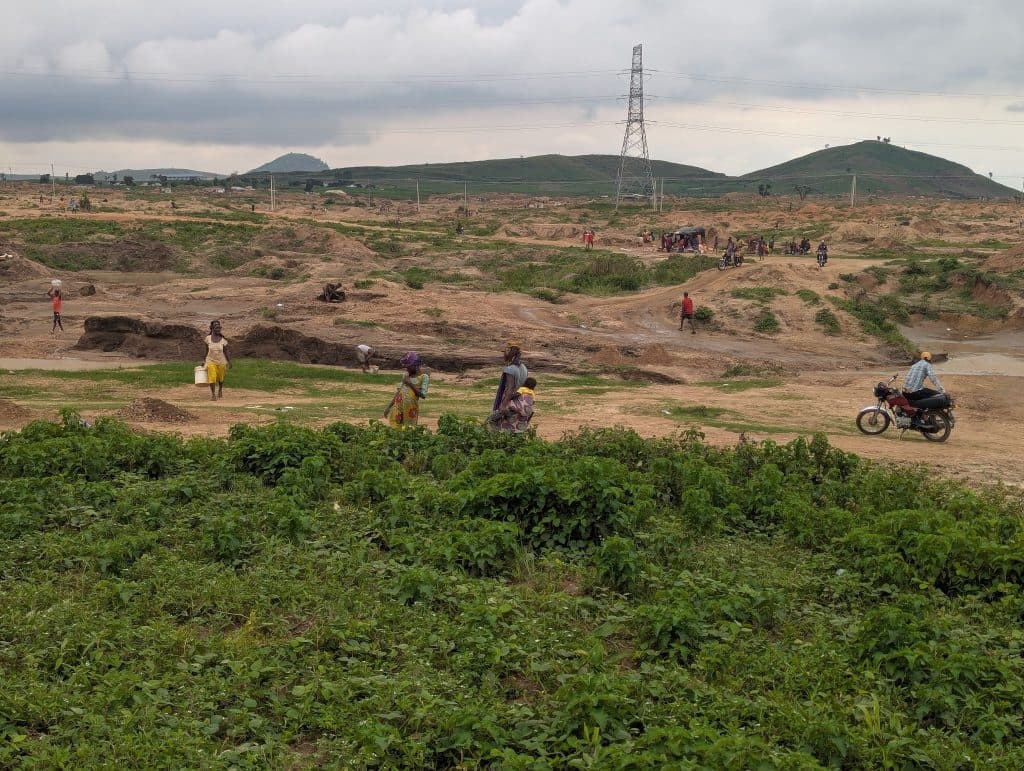
Within days, the area looked more like a pilgrimage site with hundreds of people trooping in from different parts of the community with the hope of finding gold. Locals who witnessed the incidents claimed the gold found in the pit at the time was sold for about ₦70 million, a claim HumAngle could not independently verify.
“The scene was overwhelming. Women, children, and men trooped into the area with buckets, sacks, shovels, and diggers. The once quiet community where farmlands lay became a chaotic goldfield that was difficult to control,” Sani added.
Aisha Abdulmutalib, a mother of three who had joined the gold hunting, described the scene vividly. “It was like a festival. People were running, shouting, digging everywhere. I saw mothers with babies tied to their backs, scooping sand into bowls and sacks. Everyone believed they would find gold.”
When she stood at the edge of a trench one afternoon, the frenzy was overwhelming as farmlands were invaded, Aisha recalled. Plots meant for houses were dug up, and the landscape transformed into a maze of pits.
“The noise was too much, and you could hear the ground shaking from all the digging while some pits were collapsing. In my head I thought, ‘this is madness.’ But I also thought, ‘What if I find gold?’ That hope kept us digging,” she said. After spending about seven hours there, Aisha never found gold; she returned home with severe body pain.
Musa Sirajo, a motorcycle rider, also left his work to join the gold hunt last year. Originally from Zamfara in northwesternNigeria, Musa has been in the motorcycle business for about 12 years now. That afternoon, he had taken a passenger towards the area when he heard the news. He thought of going there to see for himself, where he later met some of his colleagues, who confirmed to him that they had gotten some gold there and had loaded sacks filled with sand materials heading to a nearby river for another separation.
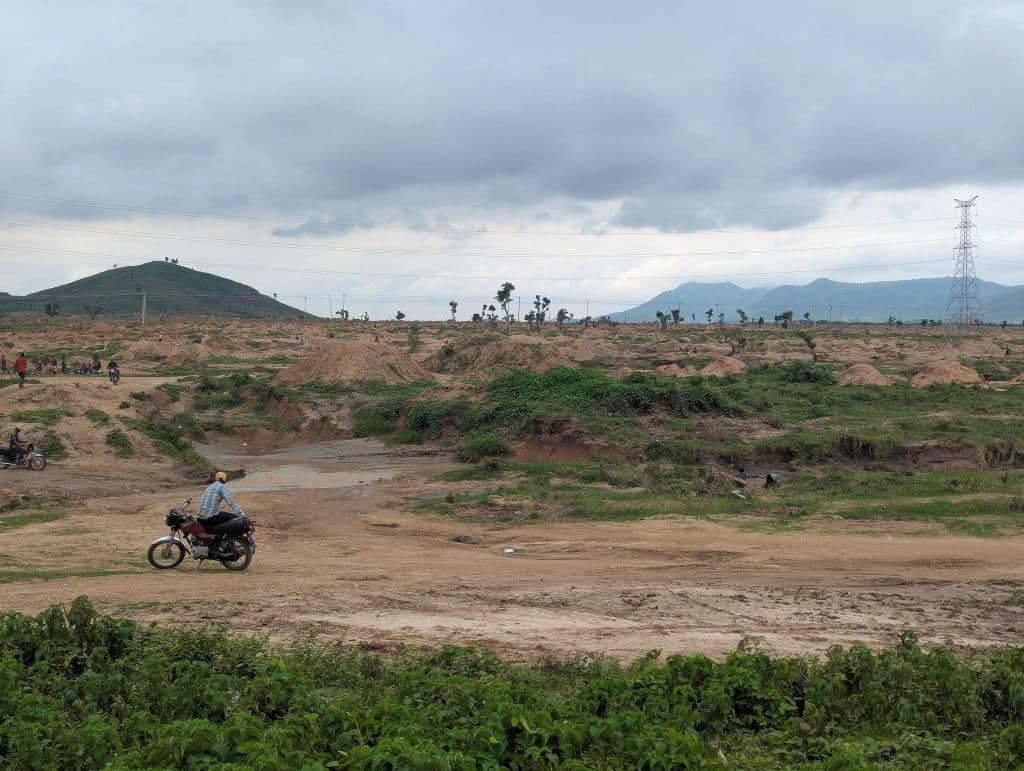
“Immediately I heard that they had gotten gold there, I parked my motorcycle, locked it, and collected a shovel and digger and headed straight into the field and started digging. I was digging until my hands were blistered. Though I found small pieces, it was nothing like the ₦70 million story,” Musa said.
While Musa and Aisha didn’t get much gold due to lack of experience, their choices reveal the captivating promise of the rush. They were convinced it would transform their lives, but after trying for several months, they realised that reality was far from what they had hoped for: it was a path meant only for those with experience in illegal mining.
A few days after gold was discovered in Gwagwalada, Dele Alake, Nigeria’s Solid Minerals Development Minister, directed mining marshals to seal off the illegal gold mining site. The decision was taken to mitigate environmental hazards and prevent further destruction of farmland, according to Segun Tomori, the minister’s spokesperson.
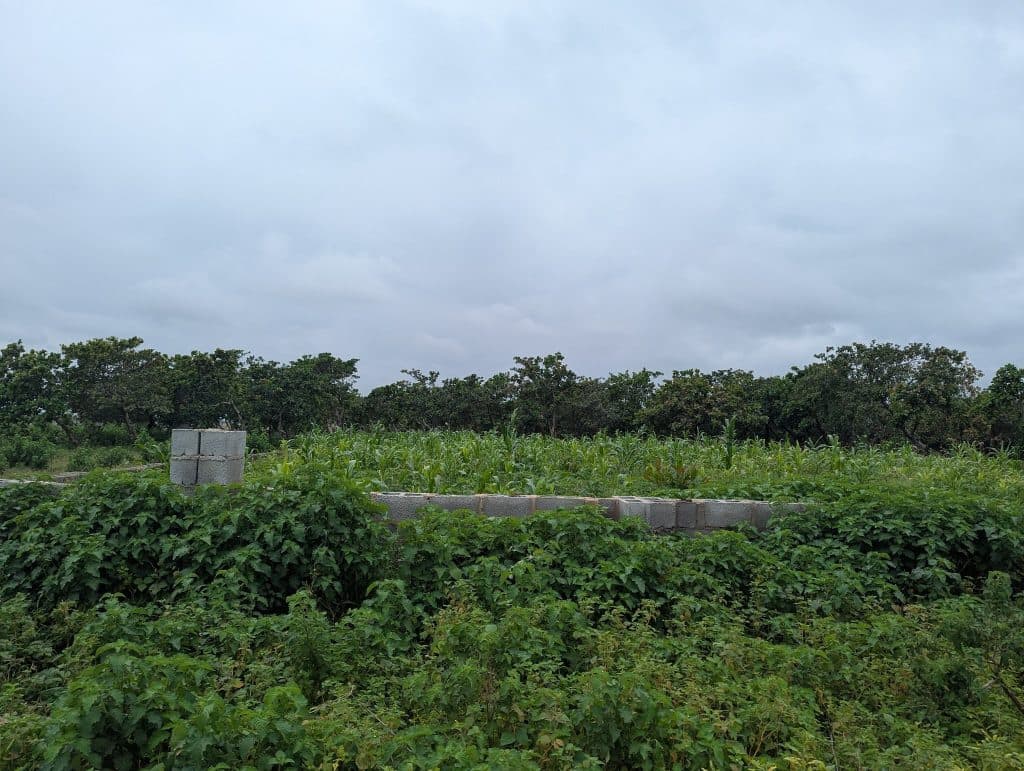
“Preliminary investigations reveal that illegal artisanal miners invaded the area after the accidental discovery of a gold vein during the digging of a soakaway pit near a residential property. The most recent incident took place on farmland located behind CKC in Gwagwalada,” the statement said.
Weeks later, the mining marshal left the area, but the mining activity continued. When HumAngle visited the site in July, the once-thriving farmlands had been reduced to wastelands with fruit-bearing trees cut down, crops destroyed, and farmers displaced. Many have abandoned their plots altogether, retreating to their ancestral villages to survive.
Despite a reduction in the number of miners, the activity continues. People from Zamfara, Sokoto, and neighbouring states arrive daily, hoping to strike gold. The pits only grow deeper, the chaos more entrenched. At the mining site, one illegal miner, known as Aminu SK, told HumAngle that the lure of gold had changed his life in six months. He admitted to HumAngle that the mining site had been profitable.
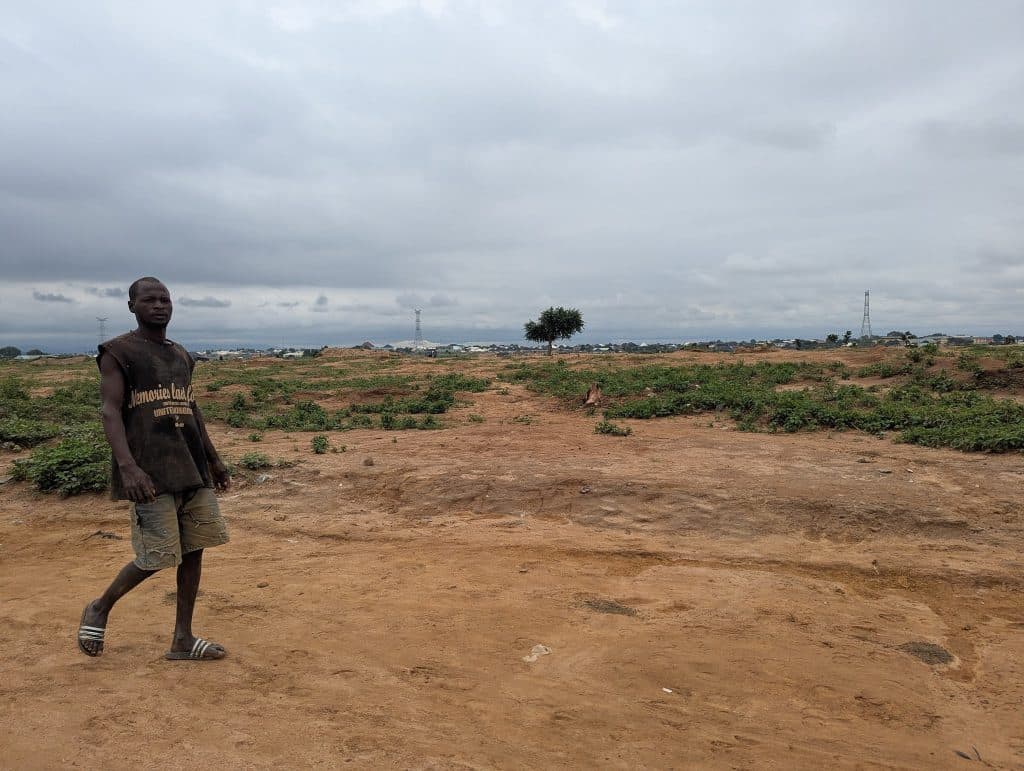
“I have made a lot of money from this place,” he said, his voice carrying both pride and defiance. “That is why we keep coming back.”
Aminu revealed that the wealth comes with constant tension as security personnel occasionally arrive to disperse them or even make some arrests, but the encounters rarely last. “When they come, we run away, and after a day or two, they leave. Then we return and continue our work.”
When asked if he knew that the sites they were mining were actually farmlands belonging to local farmers, he says: “Yes, I know because we met some ridges here. But we are also looking for a means to survive; that is why many of us are here.”
The struggle for survival
For farmers around the District 2 Extension layout in Gwagwalada, the illegal mining encroachment has become a daily reality that erodes their livelihood and their hope for the future. What once was fertile land for maize, rice, beans, and groundnut has now been reduced to excavated pits and barren soil. Just like Agbada, Ibrahim Samson, another local farmer, recalls how his hopes for a good harvest were dashed when miners invaded his land.
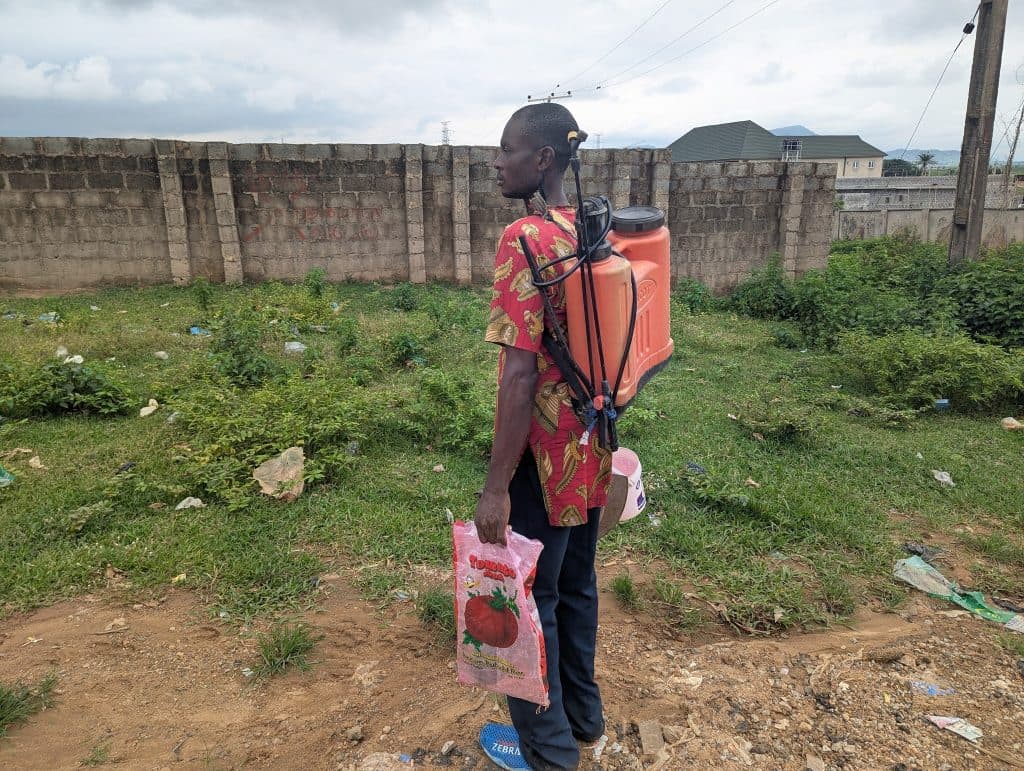
“I had sprayed chemicals and planted corn and beans with the hope that my family would have food to eat. It had started sprouting when they entered my farm at midnight and dug through my crops. The next morning, I was heartbroken,” Ibrahim complained.
Farmers who previously harvested 50 to 100 bags of maize or 20 to 30 bags of rice now struggle to gather enough for their own consumption. “Before now, I sometimes harvest two or three bags of guinea corn, four bags of maize, and two bags of beans,” he added. “But now I have nowhere to farm. I had to beg a company close to the roadside to allow me to plant corn near their fence.”
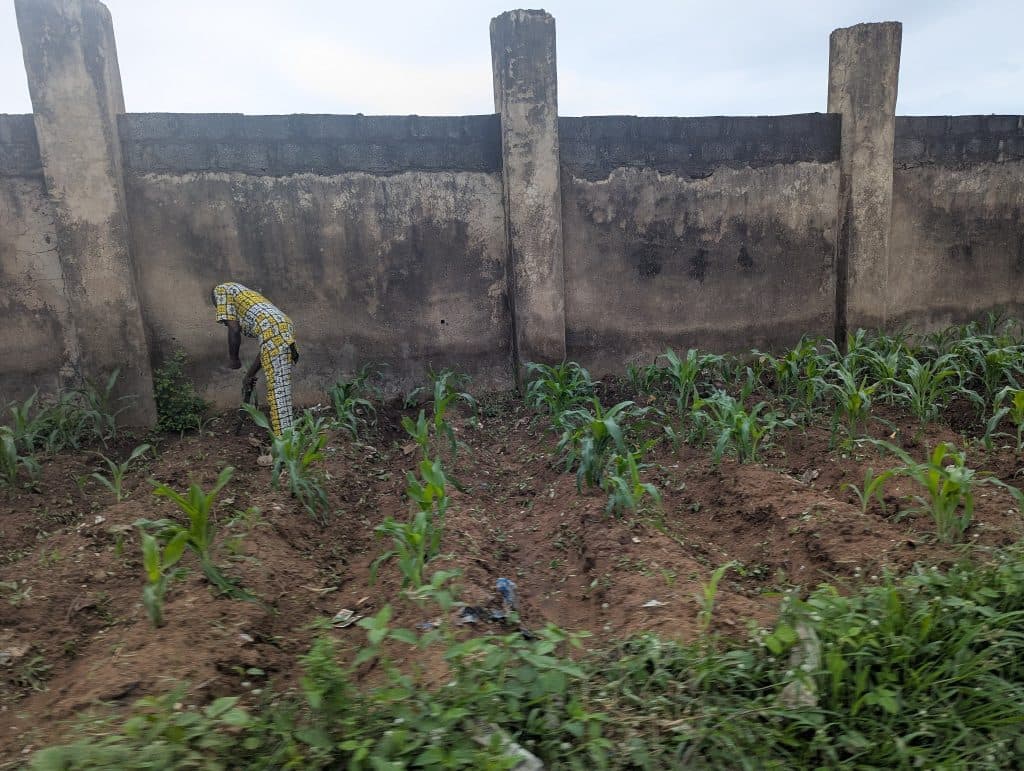
The devastation has compelled many to completely abandon their lands. Agbada and Ibrahim owned large farms in the area. During a recent HumAngle visit, only Agbada was observed working on a small plot, where he was harvesting melon seeds, the only crop he had planted. “You barely see farmers around here again because they have all moved to other locations to rent land or gone back to their villages,” Ibrahim noted
The wider impact
The consequences of illegal mining extend beyond individual farmers, according to experts. Studies have shown that illegal mining activities significantly undermine agricultural productivity and rural livelihoods by destroying farmland, displacing farmers, and creating long-term environmental degradation that is difficult to reverse. Experts warn that illegal mining in farming communities could increase food insecurity, as reduced agricultural output directly affects household consumption and local markets.
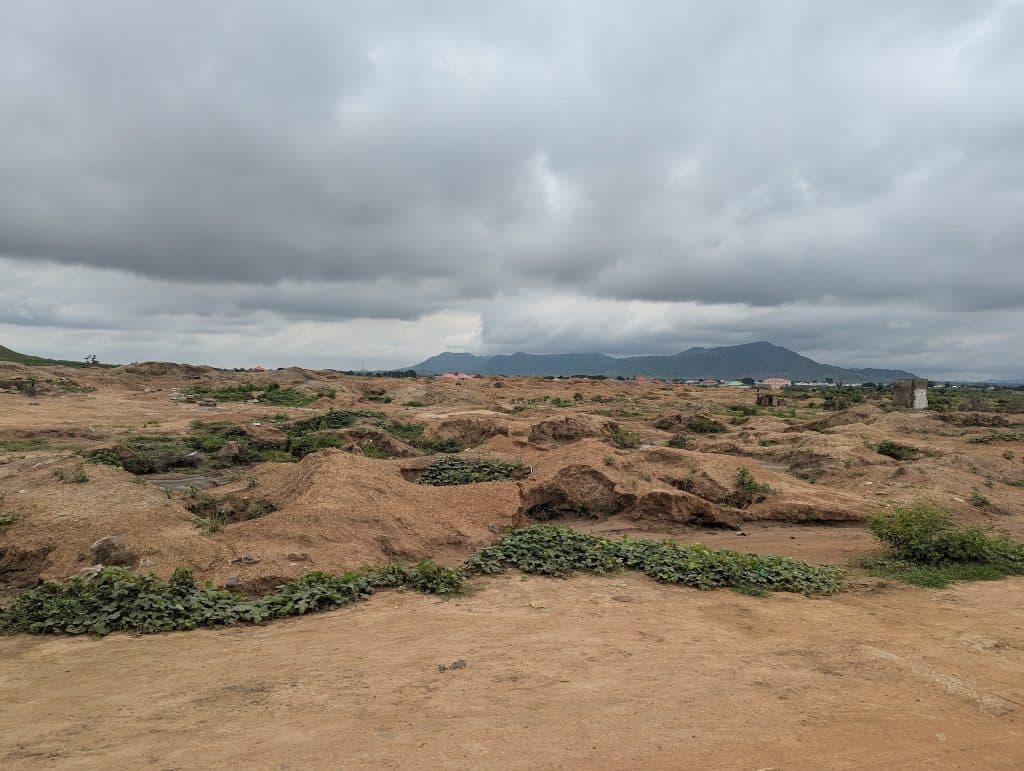
Risk management expert Abbas told HumAngle that the economic ripple effect is significant and the environmental damages are equally severe.
“Reduced yields mean less produce for local markets, fewer opportunities for trade, and diminished income for households. Mining activities leave behind deep pits that make the land unusable for future farming, and rehabilitating such land requires resources that smallholder farmers simply do not have,” he noted.
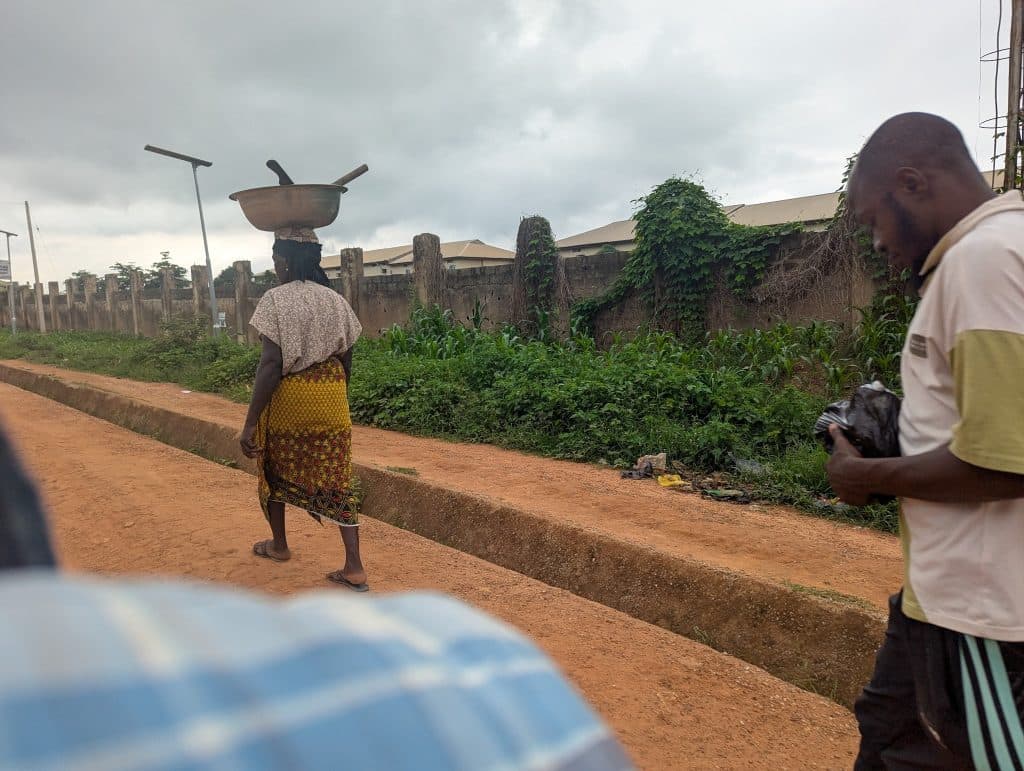
For Agbada, Ibrahim, and other farmers alike, survival now means improvising: farming on borrowed land, harvesting smaller yields, and struggling to feed their families while illegal miners continue to wreak havoc on their lands and pocket the proceeds. As the gold rush continues, farmers are struggling to adapt. They try to plant in the small corners of their land that have not yet been disturbed by miners. Each morning, they wake up hoping not to lose the few cash crops they have planted, such as melon seeds, which they rely on to sell and buy food.
“I am not against people looking for wealth,” Agbada said. “But why must they destroy our farms? Why must they take away the only thing we have?”
Support Our Journalism
There are millions of ordinary people affected by conflict in Africa whose stories are missing in the mainstream media. HumAngle is determined to tell those challenging and under-reported stories, hoping that the people impacted by these conflicts will find the safety and security they deserve.
To ensure that we continue to provide public service coverage, we have a small favour to ask you. We want you to be part of our journalistic endeavour by contributing a token to us.
Your donation will further promote a robust, free, and independent media.
Comments
0 comments
No comments yet.
Sign in to join the discussion.
Of course, we want our exclusive stories to reach as many people as possible and would appreciate it if you republish them. We only ask that you properly attribute to HumAngle, generally including the author's name, a link to the publication and a line of acknowledgement.