A Year After Maiduguri Flood, Fears Linger Despite Positive Forecasts
Haunted by the Sept. 2024 flood, residents of Maiduguri in Borno State, northeastern Nigeria, remain anxious despite forecasts of easing rains and government assurances.
Listen to this story
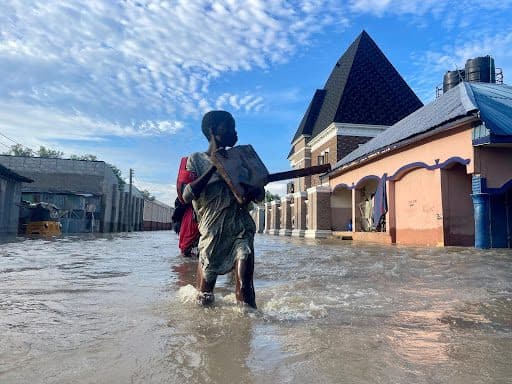

10 Sept 2025
Weather forecasts suggest Maiduguri and surrounding communities in Borno State, northeastern Nigeria, are set for reduced rainfall in the coming days, offering some relief to a city haunted by last year’s Sept. 10 devastating flood.
The chance of rain, which stood at 74 per cent last week, is expected to drop to 11 per cent today, easing pressure on the city’s fragile drainage systems and flood-prone neighbourhoods. According to AccuWeather, scattered showers are still expected, but without the intensity that typically triggers flash floods.
For residents, however, the reassurance is tempered by painful memories. Nearly half of Maiduguri was affected last year, with at least 150 lives lost, according to the National Emergency Management Agency, and over 400,000 people displaced. Critical infrastructure was damaged, livelihoods destroyed, and many survivors are still struggling to recover.
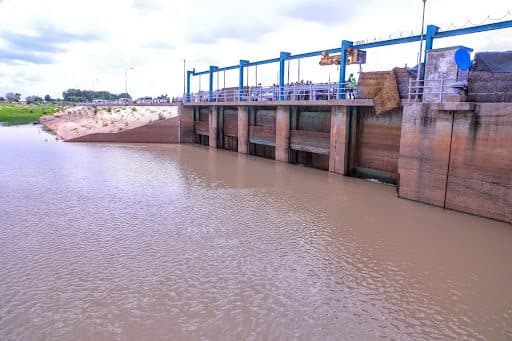
The improved forecast offers hope, but Maiduguri’s long history of flooding means residents remain wary. Last year’s calamity was not caused solely by rainfall but by inadequate infrastructure, blocked drainage systems, and the dam’s failure. HumAngle reported extensively on the series of events that led to the flood.
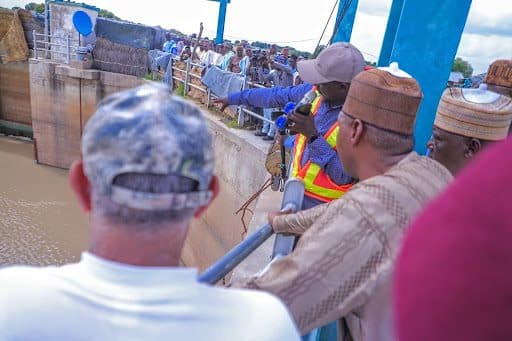
Babagana Zulum, the state governor, who visited the Alau Dam recently, assured residents that water levels are now stable after controlled releases since July.
“Based on current engineering analysis, there is no cause for alarm,” he told journalists.
Yet not everyone is convinced. Timothy Olanrewaju, a resident who was affected by last year’s flood, said the government’s assurance should be taken with a grain of salt.
“We can’t assume that just because the rain is easing compared to last month that we won’t experience flooding,” he said. “Two communities, 505 Housing Estate and Fori Layout, were flooded last weekend, even though there was no heavy rainfall in the city. The Ngada River simply overflowed its banks, and the water made its way into those communities.”
Like many residents, Timothy said he has yet to replace most of the items he lost in the last flood. “Even my car, which was submerged in the water for over a week, is still in terrible shape. I’ve spent a lot of money on it, but it’s not fully repaired,” he said, adding that he is still traumatised.
“Every time I hear the sound of rain, I start to panic, thinking the flood is coming. A few days ago, I learned that some communities in the city were flooded, and it made me anxious. I began to worry that we would experience the same things we did last year.”
Residents take precaution
In the absence of certainty, some communities are taking matters into their own hands. At the State Low-cost Estate, one of the hardest-hit areas last year, residents have begun desilting their clogged drains during environmental sanitation exercises.
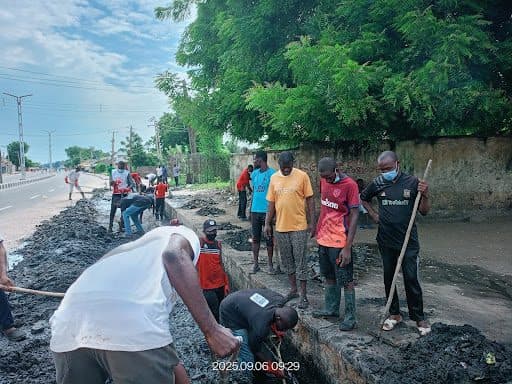
“We were blamed for the flooding we face here because of blocked drainage,” said Abdulkareem Mai Modu, a resident of the estate. “So, in order not to take any chances, we decided to pool our resources and clear all our waterways to avoid any disaster.”
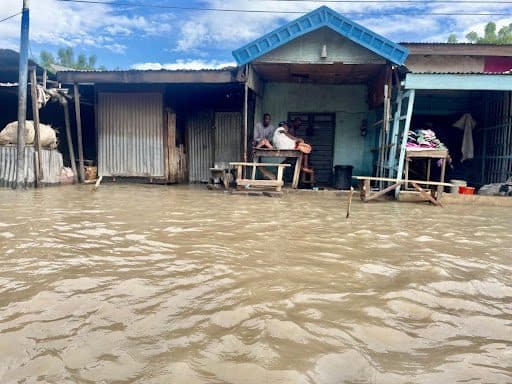
Others, like automobile mechanic Yahaya Garba, remain displaced. “We are still taking temporary abodes at the homes of our relatives. I hope there will be a permanent solution to this annual calamity that comes to our homes,” he said. Yahaya’s home in Bulunkutu is still submerged from the recent excessive rainfall.
In the 505 Housing Estate, where floodwaters recently breached perimeter fences, resident Babagana Wakil described wading through knee-deep water.
“Many residents to relocate as quickly as possible,” he said.
“The government needs to step up and ensure they monitor the flow of water and, when they see danger, pass on information to residents as quickly as possible so people can evacuate from flood-prone areas,” Timothy added.
Support Our Journalism
There are millions of ordinary people affected by conflict in Africa whose stories are missing in the mainstream media. HumAngle is determined to tell those challenging and under-reported stories, hoping that the people impacted by these conflicts will find the safety and security they deserve.
To ensure that we continue to provide public service coverage, we have a small favour to ask you. We want you to be part of our journalistic endeavour by contributing a token to us.
Your donation will further promote a robust, free, and independent media.
Comments
0 comments
No comments yet.
Sign in to join the discussion.
Of course, we want our exclusive stories to reach as many people as possible and would appreciate it if you republish them. We only ask that you properly attribute to HumAngle, generally including the author's name, a link to the publication and a line of acknowledgement.