10 Ways Nigeria’s Northwestern States Have Tackled Terrorism Without Much Success
Nigeria's Northwest and North-central states, currently plagued by terrorism, have attempted to solve the problem in many ways, but insecurity still appears to have free reign. What other options are there left?
Listen to this story

8 Jul 2022
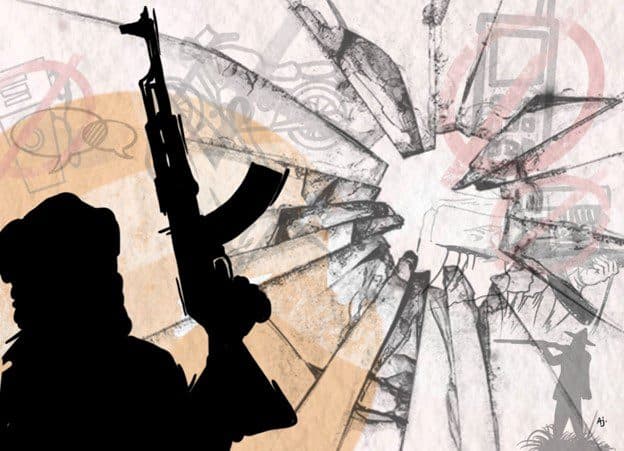
Hardly a day passes without an attack from the terrorists. They kidnapped Alhaji Danladi Barata and his son four weeks ago – they are still nowhere to be found. We are totally unsecured. We used to have an overnight stay. But in this period when the attacks are intensifying every day, we hardly stay up to 9 p.m. outdoors,” Abubakar Sabi’u said as he narrated what happened in Sabuwa, Katsina, in May 2020. Over two years later, the security situation in Katsina and other states in northwestern and north-central Nigeria has remained grim despite several attempts by the authorities to restore order. Here we take a closer look at 10 of the approaches the government(s) and other stakeholders had adopted as well as the varying levels of success.
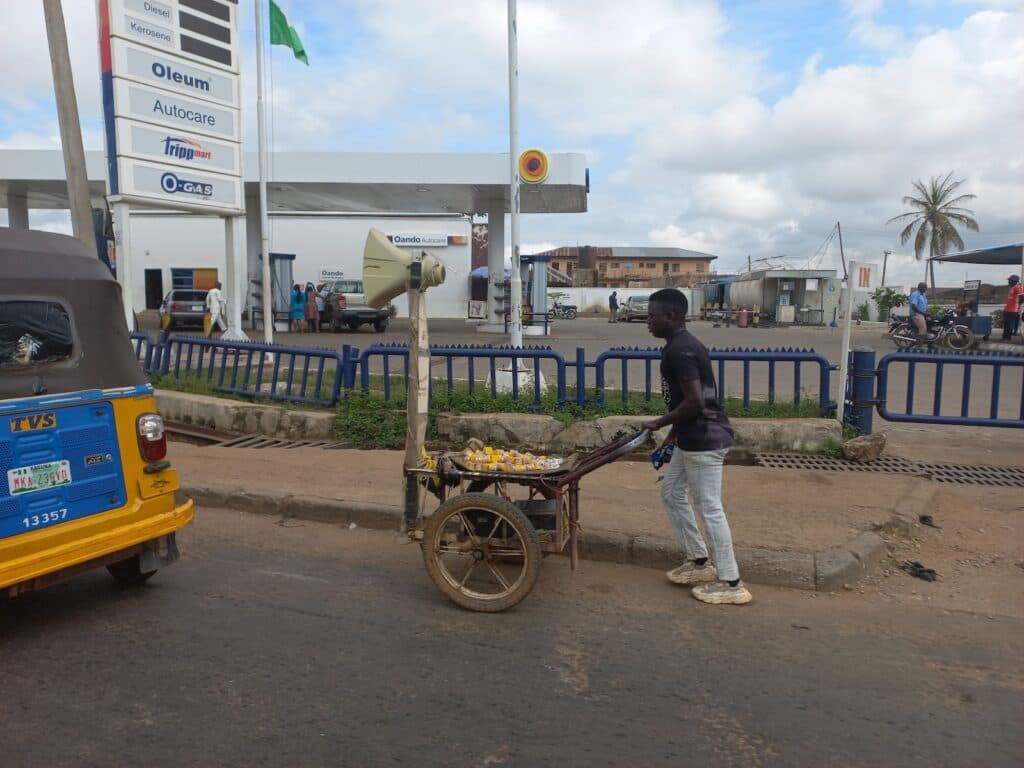
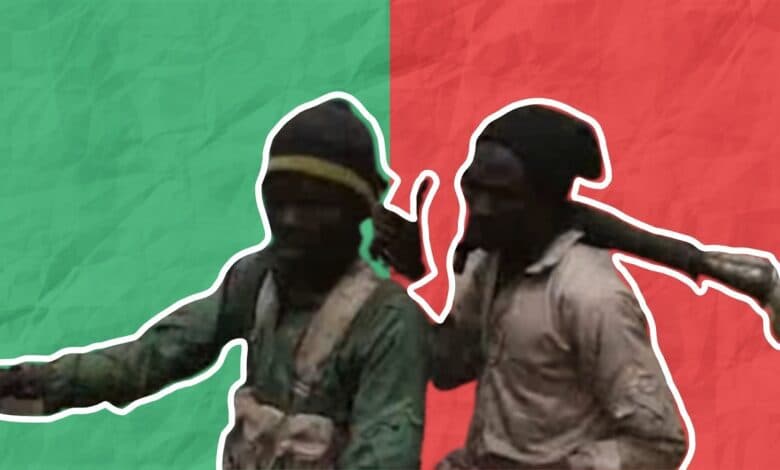
Motorcyclists on a street in Kaduna. Photo: Nathaniel Bivan/HumAngle Today, motorcycles still roam some parts of these seven northern cities, despite the ban, while state authorities fight to stop their movements. In the same vein, terrorists continue to wreak havoc as they ride in twos. One of the most recent examples is the June 30 attack in Bukuyum Local Government Area (LGA) of Zamfara, Northwest Nigeria, where about 300 terrorists rode into Gadar-Zaima on about 150 motorcycles. Two persons were killed and 12 others were kidnapped. Months before that, the soldiers under ‘Operation Hadarin Daji’ killed an unknown number of terrorists and dislodged camps in Gando-Kairu forests in the same Local Government Area. Over 100 motorcycles were said to have been recovered. This is not all. In Maigu, a settlement in Shiroro LGA of Niger State, North-central Nigeria, terrorists used the area as a route for launching attacks on other communities. There, they rest, intimidate and rape the women. “When they intend to attack a place, they keep their motorcycles and trek,” Dogo, a resident who fled the area, told HumAngle. This particular gang was responsible for setting off bombs in parts of the state. Dogo’s story, pointing to early 2022, tallies with reports of bomb blasts around Shiroro LGA in February of the same year.

“In Afghanistan, they wanted to take over the country, to Islamise it. In Iraq, they also wanted to take over the country. Islamic terrorists aim to take over the religious system of that country, then they go to education to change the curriculum. Then they now target the government. Once they do that they take over the country’s security. After that, they take over the economy. Those are the five areas they target,” he said. So, when a government knows all these, these are the areas a serious government focuses on, by ensuring its security personnel are well equipped and indoctrinated against the ideology the terrorists are propelling. “If you don’t, a soldier who is a Muslim can fall in love with them and become a spy, “ he added. “Buratai [Nigeria’s former Chief of Army Staff] changed the pattern and brought in Lucky Irabor to head Operation Lafiya Dole, and they were able to recover 17 Local Government Areas.” Okezie said when the military is well-equipped and succeeds in recapturing lost territories, the police should take over those areas after being re-orientated for the purpose. After that, traditional rulers and Muslim clerics should be involved and advised against preaching inciting sermons. “This has never been done,” he emphasised. “They will be the ones to start inculcating the new ideology in the youths.” The self-defence question In an earlier report, HumAngle had questioned whether Nigerians should be allowed to bear arms and Okezie had strongly discouraged it. He, however, advocated for state policing where various governments will be given autonomy for running their state security apparatus. Yusuf Anka, a Zamfara-based security analyst, added that “what is lacking [in the fight against insecurity] is the political will at the local and presidential level.” Recently, in a move that proved controversial, the Zamfara State government said it intends to support 500 people in each of its 19 Emirates to obtain firearms for self and community defence. The Katsina State government had since 2021 also expressed its decision to help its citizens acquire arms for self-defence. However, it is still unclear whether the latter’s decision has succeeded, thereby encouraging its neighbour, Zamfara, to follow suit.
Support Our Journalism
There are millions of ordinary people affected by conflict in Africa whose stories are missing in the mainstream media. HumAngle is determined to tell those challenging and under-reported stories, hoping that the people impacted by these conflicts will find the safety and security they deserve.
To ensure that we continue to provide public service coverage, we have a small favour to ask you. We want you to be part of our journalistic endeavour by contributing a token to us.
Your donation will further promote a robust, free, and independent media.
Comments
0 comments
No comments yet.
Sign in to join the discussion.
Of course, we want our exclusive stories to reach as many people as possible and would appreciate it if you republish them. We only ask that you properly attribute to HumAngle, generally including the author's name, a link to the publication and a line of acknowledgement.